
Rejection as the exile alarm: why social pain can feel so physical

By Olena Baeva
Published 10 September 2026
Most people dislike rejection. It hurts to be criticised, misunderstood, ignored, corrected, laughed at, or left out. But sometimes rejection does not land as ordinary disappointment. It lands as shock. Pain. Collapse. Rage. Shame. A sudden blankness. A feeling of being exposed, condemned, or pushed out of belonging.
This article is not about ordinary hurt feelings. It is about the acute rejection state: the moment when criticism, exclusion, disapproval, silence, ambiguity, or a shift in someone’s tone lands in the body as danger.
A useful way to understand it is this:
Rejection can feel like an ancient exile alarm echoing through every previous threat to belonging.
The body is not only responding to what happened now. It is responding to what now reminds it of.
Why rejection can feel like danger
Human beings are social mammals. For most of human and pre-human history, being pushed out of the protective group was not merely emotionally painful. It could be dangerous. Outside the group, there was less access to food, shelter, protection, childcare, shared knowledge, status and defence.
Across mammalian life, separation from the group can mean vulnerability. A young animal outside the herd, troop, pack or family system is easier to neglect, abandon or kill. Nervous systems therefore became highly responsive to signs of separation, rejection and loss of protection.
There is a useful parallel with fear of snakes. Many mammals do not need repeated direct experience with snakes to become alert to snake-like cues. Some dangers are learned quickly because missing them is costly. Rejection may carry a similar ancestral charge. If the group turns away, safety may be at stake.
For millions of years of mammalian and hominin evolution, difference or transgression could carry physical consequences. A person could be hit, kicked, mocked, shamed, driven away, refused food, denied care, or left outside the circle of protection. The nervous system did not evolve in a world where rejection was only a painful thought. It evolved in bodies for whom rejection could become physical danger.
So the rejection alarm may not be saying only:
“Someone may not like me.”
It may be saying:
“I am being pushed out.”
“I have broken a rule I do not understand.”
“The group has turned against me.”
“I may lose protection.”
“I may be left alone with danger.”
That is why rejection can feel so disproportionate from the outside. The modern cue may be small: a delayed reply, a change in tone, a facial expression, a meeting request, a silence. But one small cue can become loud when it reverberates through older experiences of being corrected, shamed, excluded, punished or misunderstood.
Belonging is not decorative. It is survival infrastructure.
Rejection is not one feeling
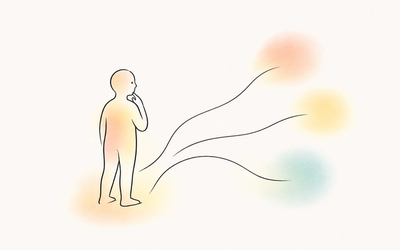
Rejection is often spoken about as if it produces one obvious emotion. It does not. Rejection is more like a cue that asks the nervous system:
“What does this mean?”
Different meanings produce different emotional states.
If rejection implies future danger, it may become anxiety:
“This could happen again. I need to prevent it.”
If rejection implies loss or failure, it may become depression:
“Something important is gone. I have failed. There is no point trying.”
If rejection implies wrongdoing, it may become guilt:
“I did something bad. I deserve punishment.”
If rejection implies personal inadequacy becoming visible, it may become shame:
“They can see what is wrong with me.”
If rejection implies unfairness or lack of relational investment, it may become hurt:
“I gave something here, and it was not valued.”
If rejection implies threat to pride, dignity or control, it may become anger:
“How dare they treat me this way?”
If rejection is compared with someone else being accepted, it may become envy:
“They received the belonging I wanted.”
If rejection involves a valued person turning towards someone else, it may become jealousy:
“I am being replaced.”
This matters because the visible reaction may not show the meaning underneath. Two people can experience the same delayed reply and have very different emotional realities.
One person feels anxious:
“Something bad is coming.”
Another feels ashamed:
“They have seen through me.”
Another feels angry:
“I have been disrespected.”
Another feels hurt:
“I mattered less than I thought.”
Another feels jealous:
“Someone else is being chosen.”
So the question is not only:
“Were you rejected?”
It is:
“What did rejection mean in that moment?”
Rejection hurts, but the inference gives the hurt its shape.
Shame’s sibling: the hidden accusation
Rejection sits very close to shame. But there may be one important difference.
Shame says:
“I know what I have done wrong, or what is wrong with me, and I am terrified that if people find out, I will be rejected.”
Acute rejection sensitivity says:
“Other people seem to know something bad about me that I do not know yet. If I cannot work it out and correct it quickly enough, I may be rejected.”
This makes rejection feel like accusation without charge.
The person may not know what they did wrong. They only know that something in the atmosphere has changed. A face tightened. A message was shorter than usual. Someone hesitated. A partner went quiet. A colleague said, “Can we talk?” A group laughed and the person cannot tell whether they are included in the joke or are the joke.
The body reacts as if there is a hidden trial already underway.
This is especially powerful for neurodivergent people who have lived with invisible social rules: rules that everyone else seemed to know, but nobody explained until after they were broken. The nervous system learns:
“The group may know I have failed before I know what the rule was.”
That is why vague disapproval can feel worse than clear feedback. Clear feedback gives the nervous system a repair route. Ambiguity creates an exile alarm with no map.
Rejection and persecutory anxiety
There is another useful lens: persecutory anxiety.
In persecutory anxiety, the person does not simply feel sad, guilty or disappointed. They feel under threat. Something hostile is sensed as coming towards the self: judgement, attack, punishment, exposure, humiliation, annihilation, or expulsion.
Acute rejection often has this flavour.
A delayed reply is not only a delayed reply.
It becomes: “They are angry.”
A quiet partner is not only tired.
It becomes: “They are withdrawing love.”
A boss asking for a meeting is not only scheduling.
It becomes: “I am in trouble.”
A small correction is not only information.
It becomes: “I have been found out.”
This is why reassurance can fail. The person may not only be asking, “Do you still like me?” They may be trying to locate the hidden accusation before punishment arrives.
In this sense, rejection is not merely sensitivity. It is social uncertainty experienced through danger.
Today’s cue, yesterday’s affective footprint
The Russian psychologist and neuropsychologist Alexander Luria gives us a useful historical bridge. In his early work on “traces of affect” — следы аффекта — Luria studied how emotionally significant material could disturb speech, timing, movement and bodily organisation even when the person was not consciously naming the emotional content.
That is useful here because the body may react before the mind has a story.
Today’s cue may land on yesterday’s affective footprint.
A partner saying “not now” may not land as “not now”.
It may land as “I am unwanted.”
A boss saying “can we meet?” may not land as “can we meet”.
It may land as “I am in trouble.”
A friend not replying may not land as “they are busy”.
It may land as “I have been dropped.”
The present cue is not always the whole trigger. Sometimes it is the doorway into an old meaning-field: shame, correction, bullying, invisible-rule failure, exclusion, punishment, or being told too many times that one’s ordinary self is too much.
When social pain becomes body pain
For many people, rejection is not only a thought. It is a body event.
It may arrive as chest collapse, stomach drop, heat, nausea, stabbing pain, paralysis, blankness, rage, exhaustion, or a sense of being physically wounded. The person may know, rationally, that they have not literally been expelled or abandoned. But the body may still respond as if social danger has arrived.
For some people, there may be a synaesthesia-like quality. Social meaning becomes bodily sensation. This is a hypothesis, not settled science. But clinically it fits what many people describe. The body does not merely think:
“I might be rejected.”
It feels:
“I am injured.”
“I am exposed.”
“I am being pushed out.”
What happens in an acute rejection spike
A common sequence looks like this:
Trigger → body alarm → inference → emotion → protective behaviour → reinforcement
The trigger is what happened.
The inference is what the nervous system decided it meant.
The emotion is shaped by that inference.
The protective behaviour is what the organism does to survive the feeling.
Examples:
Delayed reply → “I am being abandoned” → panic.
Correction → “I am incompetent” → shame.
Partner needs space → “I am unwanted” → collapse.
Friend chooses someone else → “I am replaceable” → jealousy.
Feedback feels unfair → “My effort does not matter” → hurt or anger.
Group laughter → “They know something about me” → persecutory anxiety.
The trigger may be tiny. The alarm is not.
Once the body has entered threat mode, cognition becomes expensive. The system reallocates capacity towards survival: scanning, defending, appeasing, fleeing, freezing, explaining, repairing or attacking. The person may lose language, nuance, humour, working memory, perspective, proportion and access to the other person’s good intentions.
That is why “just think rationally” often fails. The thinking system may not be fully available yet.
The key sentence is:
The pain is real; the verdict may be premature.
Or more precisely:
The feeling points to the inference. The inference still needs checking.
What helps in the acute moment
The first task is not insight. It is capacity restoration.
Do not try to solve the relationship while the exile alarm is firing. First help the body become safe enough to think.
“Sitting with the feeling” does not mean drowning in it, stewing, ruminating, replaying the injury, building the prosecution case, forcing insight, or pretending to be calm. It means reducing enough load for the feeling to finish being a body event before it is asked to become information.
Think of it as closing unused browser tabs.
During an acute rejection spike, too many tabs may be open:
What did I do?
What do they know?
Are they leaving?
How do I fix it?
Should I apologise?
Should I disappear?
Should I attack first?
What does this mean about me?
Then add sensory tabs: light, noise, notifications, hunger, pain, clothing, smell, clutter, the other person’s face, the pressure to speak.
Self-regulation begins by closing everything non-essential.
Reduce load. Restore capacity. Return with choice.
Different nervous systems need different routes back. For one person, the route is stillness. For another, movement. For another, silence with someone nearby. For another, talking it out with permission.
Low-input stillness may mean darkness, quiet, pressure, warmth, lying down, no phone, no eye contact, and fewer words.
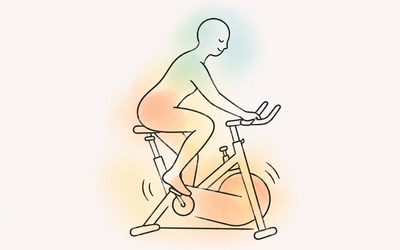
Movement may mean walking, pacing, stretching, shaking, pushing against a wall, swimming, cycling, or letting the body safely discharge mobilisation.
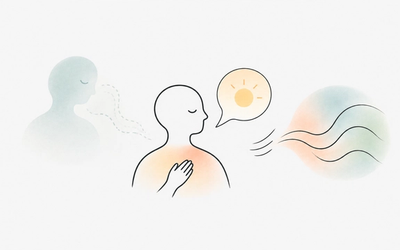
Co-regulation may mean borrowing someone else’s chill: sitting near a safe person, hearing a calm voice, being held if wanted, making tea, or being reminded, “We are okay. We can talk later.”
Verbal processing can help some people, but it needs consent:
“Can I talk this out for ten minutes? You do not need to fix it. I just need to hear myself find the shape of it.”
The listener is allowed to have boundaries:
“I can listen for ten minutes. I care about you. I cannot be cross-examined or made responsible for the whole alarm.”
A simple rejection-spike plan
Name the alarm:
“This is my rejection alarm.”
“My body is reading danger.”
“This feels like exile, but I do not yet know what it means.”
Pause the high-risk behaviour:
Do not send the long message.
Do not quit.
Do not break up.
Do not apologise for your whole existence.
Do not demand a verdict.
Do not punish yourself.
Do not decide who you are.
Choose the regulation route:
Do I need less input?
Do I need movement?
Do I need someone safe nearby?
Do I need to speak out loud with permission?
Do I need food, water, medication, sleep, pain relief, warmth or quiet?
Then wait for capacity.
You are coming back when you can form fuller sentences, consider more than one explanation, feel the other person as a whole person again, tell pain from fact, and choose rather than react.
Only then ask:
What actually happened?
What inference did my body make?
Did rejection mean danger, shame, guilt, hurt, anger, envy, jealousy, loss or exposure?
Is that inference current, old, or partly both?
What information do I need?
Is repair needed?
Is reassurance needed?
Is a boundary needed?
Is this old pain, current harm, or both?
Safety matters
Rejection can sometimes bring sudden self-attack, urges to disappear, thoughts of self-harm or suicidal ideation. If rejection pain brings self-harm urges, suicidal thinking, violence, reckless driving, substance use, or a feeling that you cannot stay safe, this needs a specific support plan with a qualified professional. It is not “just sensitivity”.
A kinder way to understand it
Acute rejection sensitivity is not proof that someone is weak, dramatic or manipulative. It may be an old mammalian belonging alarm, amplified by the echo chamber of lived experience: repeated criticism, shame, exclusion, invisible-rule failure, bullying, misunderstanding, sensory overload and emotional dysregulation.
That is a hypothesis, not a settled mechanism.
But it is a humane hypothesis because it moves us away from shame.
Not:
“You are too sensitive.”
But:
“Your nervous system may be treating possible rejection as possible exile.”
Not:
“You are overreacting.”
But:
“Your body is reacting before the present-day facts have been checked.”
Not:
“You need to stop caring.”
But:
“You need ways to stay with yourself when belonging feels threatened.”
The work is to respect the alarm without letting it run the whole life.
The goal is not to become less sensitive.
The goal is to become less exiled from yourself when sensitivity is activated.
Rejection can feel like an ancient exile alarm echoing through every previous threat to belonging. Regulation is how we quiet the echoes enough to tell pain from fact, and choose what happens next.