The different shapes of rest

By Olena Baeva
Published 27 September 2026
What gets to stop working when you rest?
You have finally reached the beach. There is nothing you need to do.
Except tolerate sand sticking to your skin, sunlight bouncing off the water, children shouting nearby and sunscreen settling into every crease. You keep adjusting your position. Someone asks why you cannot just relax.
Later, at home, you spend an hour absorbed in a familiar interest. Your attention settles. Nobody needs an answer. You do not have to make your face say anything in particular.
Someone suggests putting it away and having a proper rest.
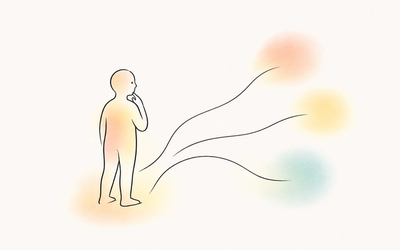
What makes one scene count as rest and the other as something you should stop doing?
We inherit pictures of rest: a beach, a sofa, a quiet room, an empty diary. Those pictures can be appealing. They also tell us very little about the work a person is still doing inside them.
Rest has different shapes because effort has different shapes.
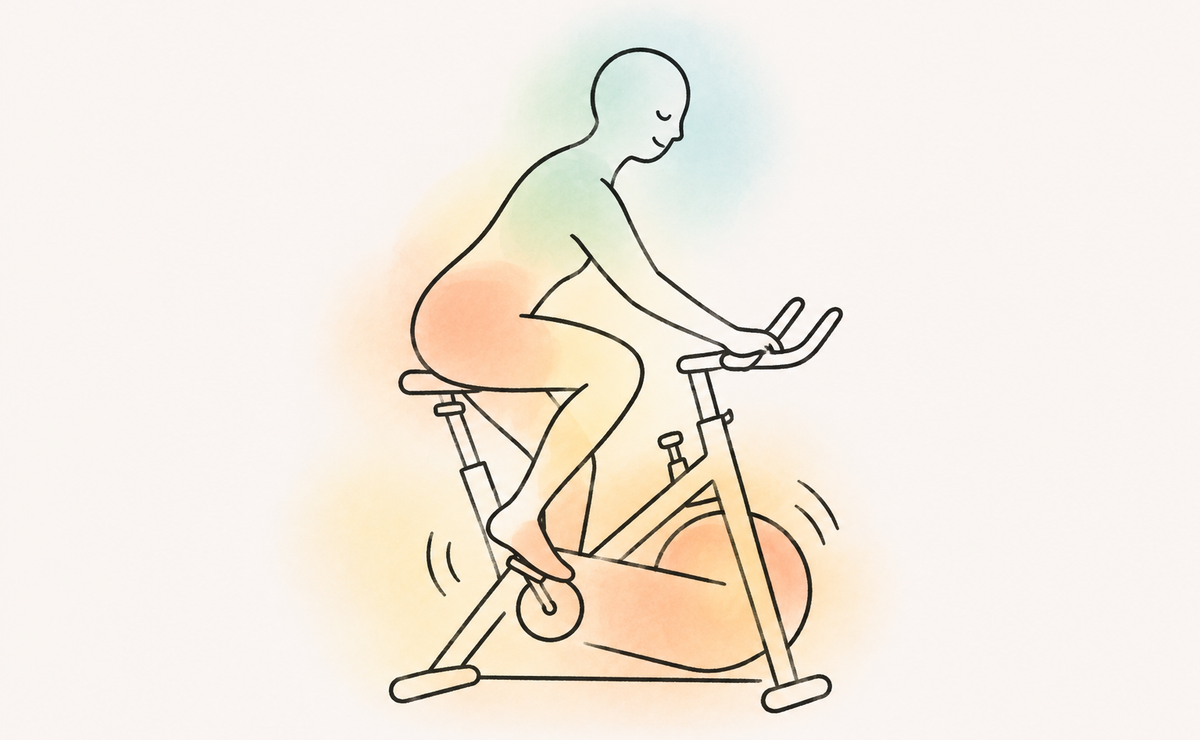
A spin class may be physically demanding while offering relief from a day of analysing, deciding and finding the right words. The instructor provides the sequence. For a while, there is a clear task with a beginning and an end.
Reading a novel may allow the body to rest while the mind follows something complicated. Looking at art may engage feeling while asking for no explanation or response.
These are possibilities, not prescriptions. The same class could overwhelm someone with noise and instructions. The same book could feel like another task. What matters is the relationship between the demands you have been carrying and the demands this activity makes now.
The idea that rest has several aspects already exists in models such as Saundra Dalton-Smith’s seven types of rest. Occupational recovery research makes another useful distinction: the activity and the experience it provides are not identical. Sonnentag and Fritz identify psychological detachment, relaxation, mastery and control as different recovery experiences. Challenge and recovery can sometimes coexist. ideas.ted.com
Thinking in dimensions of rest allows us to hold that complexity. An activity can provide emotional relief and physical effort at the same time. It can reduce intellectual demands while increasing sensory ones. We do not need to declare it entirely restful or entirely exhausting.
For neurodivergent people, this question can make visible effort that otherwise goes unrecognised.
Consider an afternoon sitting with family. You may be following several conversations, filtering background television, tolerating unexpected touch and checking whether you have spoken too much or too little. Perhaps you are preparing responses that never find a gap in the conversation.
Then someone says: “But you’ve been sitting down all afternoon.”
You have. What has been allowed to stop?
Stillness tells an observer little about the effort of interpreting, filtering, anticipating or masking. An empty diary may also leave someone mentally on call, waiting for the next message or request.
Conversely, visible activity may contain real relief. Pacing might feel easier than holding the body still. Returning to a familiar interest might offer a welcome period without repeated switching or uncertainty. Replaying a game might remove the need to learn new rules.
These experiences will differ between people and between days. There is no single neurodivergent way to rest. The useful question is whether someone’s actual experience has room to count, even when it contradicts the familiar picture.
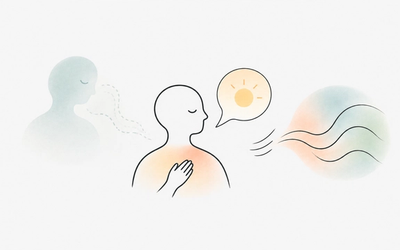
Sometimes the work we need to stop is managing how we appear to other people.
This may help explain why being alone can feel restful even when we spend that time doing something demanding. We can pause without explaining, move without being watched, or become absorbed without making ourselves available for conversation.
It also suggests a possibility within emotional rest. Perhaps looking at a painting can offer somewhere to feel without having to turn the feeling into anything. There is no reply to compose, misunderstanding to repair or practical decision to make. The emotion may be strong; the responsibility surrounding it is lighter.
That is a possible explanation to explore, rather than an established mechanism. For someone else, the painting may bring more than they have capacity to hold.
The distinction matters in relationships. “You had enough energy to do that” can sound reasonable if energy is treated as one quantity, equally available for every task. But spending an hour with a familiar interest does not establish capacity for a phone call, a crowded restaurant or a difficult conversation. Each asks something different.
Could we become curious about those differences before treating them as evidence of unwillingness? Could a partner ask what feels easier during an activity, and what becomes harder when it is interrupted?
There is a limit to this idea. Absorption, pleasure and recovery are not interchangeable. An activity can feel relieving while leaving physical needs unattended. You may emerge from enjoyable reading needing food, sleep or movement. Changing demands does not guarantee that the demands which most needed to stop have stopped.
Nor should identifying dimensions of rest become another project to perform correctly. Nobody needs to complete a daily checklist of every possible form of recovery.
It may be enough to notice: What am I tired of doing? What does this activity let me stop doing? How do I feel afterwards?
Some days the answer may be sleep or quiet. On others, movement, familiar company or deep engagement may offer something that stillness cannot.
Your rest may look ordinary. It may look surprisingly busy. Its appearance cannot tell the whole story.
What gets to stop working when you rest?