When trying stops feeling worthwhile

By Olena Baeva
Published 5 November 2026
Depression, motivation and the erosion of agency
There is a particular kind of tiredness in “What’s the point?”
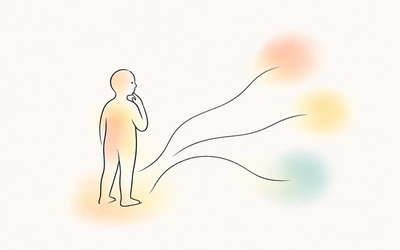
Sometimes the person asking has worked extraordinarily hard. They have planned, restarted, pushed through, tried somebody else’s method and blamed themselves when it did not work. Eventually, another attempt brings little anticipation of reward. It brings the weight of everything that has already gone wrong.
One way of understanding this is an eroded expectation of agency: the sense that what I do can influence what happens next.
This offers a possible formulation of some depressive withdrawal. It also invites us to consider how experience, exhaustion and the biology of motivation might interact.
When everything becomes evidence
Consider Alex, a fictional illustration.
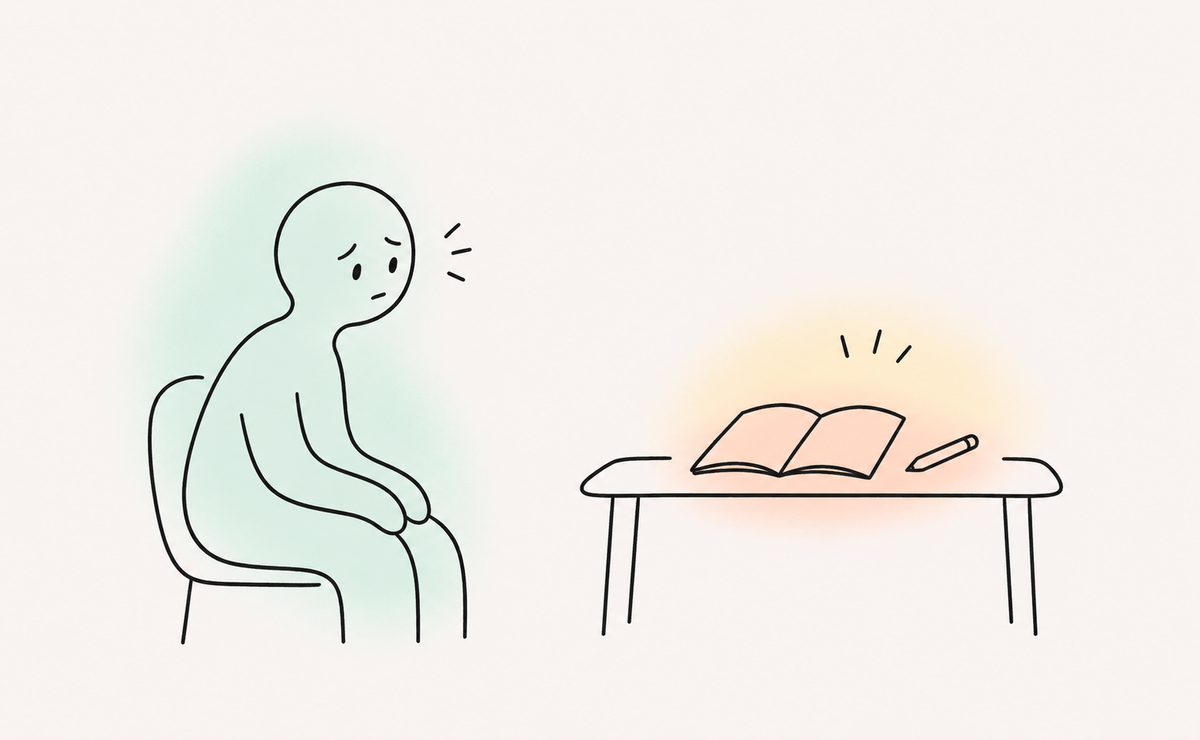
Alex remembers being able to work for long stretches. When studying became difficult, the answer was usually more effort. Over time, however, the future they had been working towards stopped feeling like a future they wanted. Trying other directions brought further disappointment.
Now, starting almost anything feels heavy.
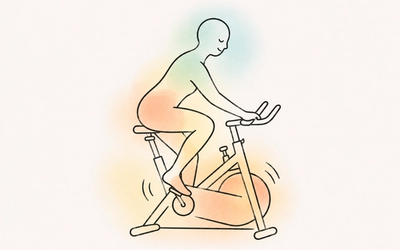
Studying tests whether they can ever catch up. Drawing tests whether they have wasted their potential. Exercise tests whether they can commit to anything. Even reading for pleasure becomes an examination: if they cannot enjoy this book properly, perhaps they will never be happy.
Each activity carries a verdict about their whole life.
Scrolling or keeping a video running provides temporary relief from that evaluation. Afterwards comes the painful awareness of time passing, followed by shame. The next attempt begins with an even greater burden of proof.
Avoidance makes sense within this experience. It provides immediate relief, while gradually restricting opportunities to discover that action could feel different.
What helplessness research suggests
The original learned helplessness theory proposed that repeated uncontrollable adversity teaches an animal that its actions make no difference. Trying subsequently diminishes, including when escape becomes possible.
Later neuroscience prompted an important revision. In animal experiments, prolonged aversive stimulation can produce passivity through stress circuitry. Experiencing control recruits mechanisms that inhibit this response. Learning that action can influence events appears protective. Maier and Seligman’s revised account therefore places considerable emphasis on learned control.
Animal experiments cannot explain the full complexity of human depression. Nevertheless, they invite a useful question: what has this person experienced about whether their actions matter?
Someone may understand intellectually that change is possible while finding that another attempt feels pointless. Their expectation may have been shaped by years of effort that produced too little benefit, too much exhaustion, or outcomes largely determined by other people.
The biology of getting towards something
Dopamine has a substantive role here. It contributes to reward learning, motivation and the allocation of effort.
In a human experimental study, amphetamine increased willingness to choose effortful tasks for rewards. Because amphetamine also affects noradrenaline, this is not an exclusively dopaminergic experiment. Nevertheless, it contributes to evidence connecting dopamine-related signalling with mobilisation. PET imaging research has also linked dopamine responsivity with willingness to expend effort.
Research in depression provides further support. A small placebo-controlled study found that repeated administration of the dopamine precursor L-DOPA improved effort-based motivation and reward circuitry in depressed participants with elevated inflammation. A larger 2025 trial found that adding the dopamine receptor agonist pramipexole improved symptoms in treatment-resistant depression.
These findings support dopamine’s involvement in some depressive difficulties. They do not establish a universal dopamine deficiency, or show that each successive failure progressively lowers dopamine release.
The distinction matters: biology can contribute to difficulty acting without providing a single explanation for how that difficulty developed.
Pleasure and mobilisation are different questions
“I cannot enjoy anything” and “I cannot get myself towards something enjoyable” describe different difficulties.
Someone may enjoy a conversation once it starts, or become absorbed in drawing once the materials are out, while finding initiation extraordinarily difficult. Another person may begin readily but experience little pleasure.
Avolition describes diminished initiation and persistence in purposeful activity. Its outward appearance tells us little about whether someone cares, what they anticipate, or how much mobilisation costs them.
For Alex, we might explore whether pleasure is absent, whether its possibility feels too remote, or whether reaching it requires more energy than is available. The answers could change what support is useful.
An attempt has a price
Motivation involves the anticipated value of an outcome, the likelihood that effort can influence it, and the cost of trying. Contemporary research on the expected value of control examines these relationships in depression.
For Alex, “read a chapter” includes starting, understanding the material, tracking time, stopping and managing the judgement running alongside it all.
For an ADHD or autistic person, that cost may also include sensory demands, switching difficulties, inaccessible methods and years of insufficient support. A prediction that effort will be exhausting may accurately describe previous conditions.
Withdrawal reduces immediate expenditure. Interpreting it as energy conservation can be useful, provided we recognise this as a possible function rather than an established purpose of depression.
A plausible clinical formulation is that costly effort, reduced expectations of influence, altered motivational processing and exhaustion reinforce one another. The sequence and contribution of each will differ between people.
Giving agency somewhere to happen
If this formulation fits, another ambitious routine may simply become another examination. Even “five minutes of drawing” can acquire the demand to prove that Alex is finally changing.
We might explore whether drawing can remain one experience: something they can choose, alter, dislike or stop without making it predict their future.
We might also ask what would make action less costly. A different format? Help getting started? A reliable stopping point? Less expected after an already demanding day? Permission to reconsider the goal?
Agency includes refusing, revising and asking for support. It becomes tangible when a boundary is respected, an adjustment helps, or stopping leaves enough energy for tomorrow.
Sometimes psychological work needs to sit alongside medical assessment and treatment. Understanding the meaning of withdrawal and addressing its biological contributors can belong within the same account.
The question I would keep returning to is:
What would allow this person to experience their choices as effective without requiring another exhausting performance?
“What’s the point?” may contain a history of trying. Understanding that history gives us somewhere more useful to begin.