When our vulnerable selves meet, our protectors do the talking

By Olena Baeva
Published 1 November 2026
Why two loving partners can suddenly become adversaries, and how to return to each other without abandoning ourselves.
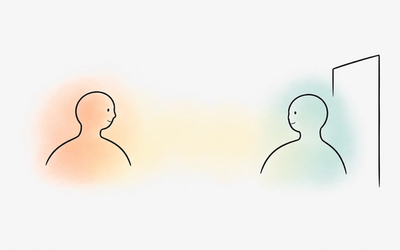
Rowan and Alex are discussing a change of plans.
It begins innocently enough. Alex suggests doing something differently. Rowan asks a few questions, wanting to understand the implications before agreeing.
Alex hears resistance. Rowan senses impatience.
“Why does everything have to become so complicated?” asks Alex.
“Why can't I just ask a question?” replies Rowan.
Within moments, the conversation is no longer about the plans.
Rowan feels dismissed. Alex feels criticised. Both become increasingly certain that the other is being unreasonable.
What neither quite recognises is that something has changed within them.
Two adults began the conversation. Two vulnerable selves have entered it. And their protectors are now doing most of the talking.
Who else is in the room?
We carry more than our present-day selves into relationships.
Earlier experiences of being criticised, ignored, controlled, rejected or misunderstood can shape what our nervous systems recognise as threatening.
Someone who repeatedly experienced their wishes being dismissed may become particularly sensitive to impatience. Someone who learnt that making mistakes led to disappointment may experience questions as challenges to their competence.
These responses need not be conscious. Nor does every strong reaction originate in childhood. Current exhaustion, sensory overload, previous relationship experiences and genuine problems in the present interaction can all contribute.
But sometimes an ordinary exchange touches something much older.
For Rowan, the sudden impatience feels painfully familiar: There is no room for what I think. I have to fight to be heard.
For Alex, the repeated questions awaken a different vulnerability: Whatever I do, it is never good enough. I am being judged again.
Neither necessarily recognises these thoughts. What appears instead is a protective response.
Rowan becomes increasingly insistent, explaining, questioning and trying to establish what happened.
Alex becomes defensive, answers abruptly and eventually withdraws.
Each is attempting to prevent a familiar injury.
And each protective response begins to resemble precisely what the other fears.
When protection becomes provocation
The protective self deserves some respect.
It developed for a reason. Perhaps insisting on explanations once helped someone resist being dismissed. Perhaps withdrawing protected someone from criticism they could not escape. Perhaps becoming decisive prevented uncertainty from turning into chaos.
These strategies may have been necessary, even ingenious, in earlier circumstances.
But protection is not always well suited to the present.
Rowan's insistence on being heard may make Alex feel increasingly interrogated.
Alex's withdrawal may make Rowan feel increasingly abandoned.
The more Rowan pursues understanding, the more Alex retreats. The more Alex retreats, the more urgently Rowan seeks reassurance.
Two people are trying to protect themselves, yet each person's protection is becoming the other's threat.
This is where the familiar advice to communicate better becomes inadequate.
They may already be communicating intensely. What they have temporarily lost is sufficient access to the reflective capacities needed to understand each other.
The conversation has become a struggle for safety rather than an exchange of information.
The temptation to rescue the other's vulnerable self
Suppose Rowan recognises what is happening.
Alex is reacting from an old wound. I need to help Alex feel safe.
This may sound compassionate. But it carries a subtle danger.
Rowan is now attempting to manage Alex's internal experience while their own vulnerable self is still frightened and unheard.
Alex may do something similar, trying to reassure Rowan, explain that no harm was intended, or persuade Rowan that the situation is safe.
Neither necessarily has the capacity to offer what the other needs.
Worse, attempts to reassure can feel dismissive, while attempts to help can feel intrusive or controlling.
We can become so preoccupied with the other's vulnerability that we abandon responsibility for our own.
There is another possibility.
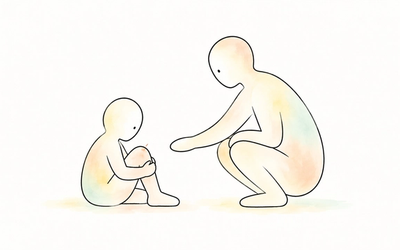
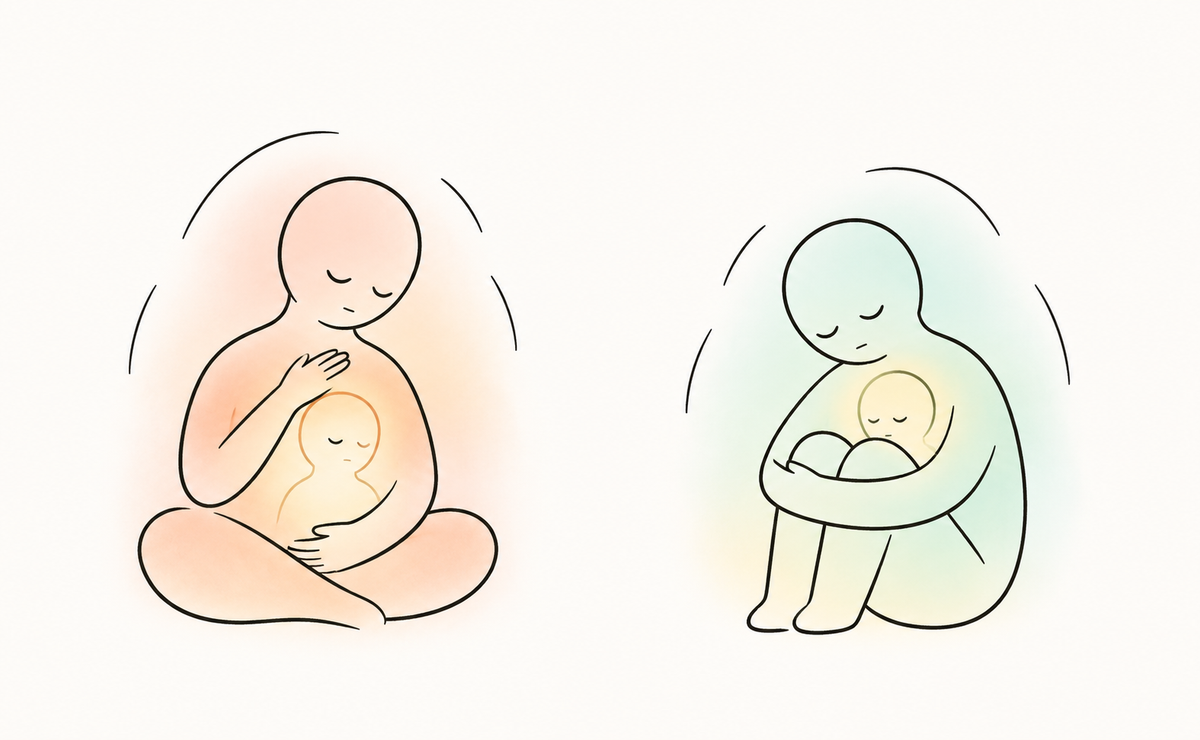
Rather than trying to become the parent of your partner's vulnerable self, become an attentive adult to your own.
This does not mean becoming indifferent to your partner's distress.
It means recognising that care offered from a state of alarm may be more protective than receptive.
Sometimes the kindest thing we can do for the relationship is to temporarily stop trying to fix each other.
Turning towards ourselves
Imagine Rowan recognising the familiar urge to explain, question and insist.
Instead of pursuing Alex for one more answer, Rowan pauses.
Something in me is frightened of being dismissed.
That fear makes sense. I have known what it is like not to have a voice.
But I do have a voice now. I do not have to establish everything in this moment.
Meanwhile, Alex notices the urge to defend, become categorical or leave.
Something in me feels accused.
I know how painful it is to feel that nothing I do is good enough.
But a question is not necessarily a judgement. I can be uncertain without being inadequate.
Neither person is being asked to deny what they felt.
Neither is required to declare the partner innocent or their own perception mistaken.
They are simply making room for a distinction:
What I am feeling is real. What I believe it means may still need examining.
This is validation without surrendering discernment.
Allowing the protectors to stand down
Protective responses are rarely persuaded to disappear through criticism.
Telling ourselves to stop being defensive, stop overreacting or behave like an adult can introduce yet another layer of internal judgement.
A different approach is to acknowledge what the protective response has been trying to accomplish.
I understand why you want to fight for our voice. Thank you for trying to protect it.
Or:
I understand why you want to withdraw. You are trying to prevent another painful confrontation.
And then an invitation:
We have more choices available now. You do not have to carry this alone.
The language of vulnerable selves and protectors is a metaphor drawn from parts-oriented therapeutic approaches. It does not mean that separate personalities literally take over. It describes how familiar emotional and behavioural patterns can become dominant under stress.
Nor is standing down a matter of commanding the nervous system to become calm.
Sometimes it requires silence, movement, sensory relief, solitude, or enough time for speech and reflection to become accessible again.
The protector does not need to be defeated. It needs sufficient evidence that it no longer has to run the entire conversation.
When the adults return
Later, Rowan and Alex return to the original discussion.
The disagreement has not magically disappeared.
Rowan still needs time to understand the proposed change. Alex still finds repeated discussion tiring.
But they are no longer required to defend their entire sense of self through the outcome.
Rowan might say:
“When the conversation became abrupt, I felt dismissed. I recognise that some of that fear is familiar from earlier experiences. But I would still like you to understand how your tone affected me.”
Alex might respond:
“I felt criticised when you kept questioning the decision. I became defensive and closed the conversation too quickly. I can understand why that made it harder for you.”
Notice what has changed.
Both can acknowledge their own experience without making it the only legitimate reality.
Both can recognise their contribution without accepting responsibility for everything.
And both can distinguish historical pain from present behaviour, without pretending that either is irrelevant.
They can now ask the practical question again.
Perhaps they will agree. Perhaps they will not.
But disagreement no longer needs to become a referendum on whether either person is safe, valued or lovable.
The responsibility of caring for our own vulnerable selves
There is a particular freedom in recognising that our partner cannot be responsible for repairing everything that happened before we met.
Equally, our earlier injuries do not absolve our partners of responsibility for their present behaviour.
If someone's tone is dismissive, it deserves attention. If someone's questions become intrusive, that deserves attention too.
And where genuine intimidation, coercion or mistreatment is occurring, the answer is not to persuade ourselves that the danger belongs to the past.
The invitation is to distinguish what belongs to now, what belongs to earlier experiences, and how much of each might be present.
We can care deeply for another person's vulnerability without taking ownership of it.
We can recognise our protective impulses without automatically obeying them.
And we can return to a difficult conversation when we have enough capacity to remain curious, accountable and open to being surprised.
Perhaps this is one of the quieter forms of maturity in relationships:
Not expecting our vulnerable selves to disappear, but learning to care for them well enough that they no longer have to negotiate the relationship on our behalf.
The conversation can then become a meeting between two people again.
Not two people without histories, wounds or protective instincts.
Just two people who have made enough room within themselves to encounter each other as they are now.