Whose scale are you using?

By Olena Baeva
Published 13 October 2026
Recognising another person’s experience without pretending it is your own
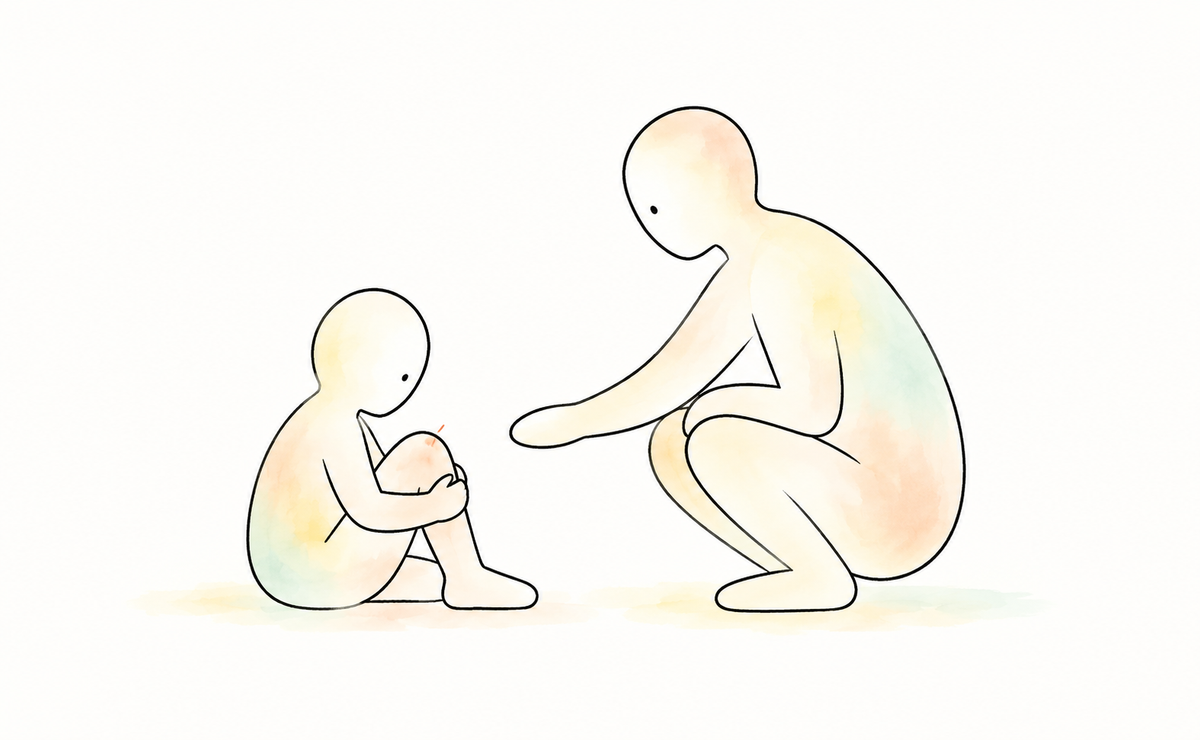
Your child falls, grazes their knee and starts crying.
You look at the scrape. It is small. You have had worse injuries, and you know this one will probably heal quickly.
“It’s nothing,” you say, intending to reassure them.
But your child is not experiencing your forty years of perspective. They are experiencing a hurting knee, the shock of falling and perhaps uncertainty about what happens next.
You are describing the injury. They are reporting the experience.
Both of you may be accurate. Yet your answer can leave them feeling that their pain has been dismissed.
Something can be small in your estimation and significant in someone else’s experience.
A number without a starting point
At a doctor’s appointment, you are asked to rate your headache from one to ten.
You pause. How are you supposed to know? What does someone else’s five feel like? Where does your headache sit among all the headaches people could possibly have?
The question may seem straightforward to the person asking it. For you, it has no clear reference point.
Pain scales usually offer anchors such as “no pain” and “worst imaginable pain”. You are being asked to report your experience, rather than place yourself accurately within everyone else’s. Even with those anchors, translating a sensation into a number can be difficult.
You might find it easier to say: “I can carry on talking, but I cannot concentrate enough to read,” or “The light feels unbearable, and I need to lie down.”
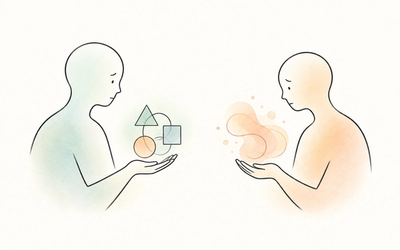
That difficulty points towards a wider problem in relationships. We often behave as though our internal measuring instruments are interchangeable.
They are not.
What feels manageable to you may be overwhelming to another person. What you do almost automatically may require their sustained attention. What you consider an ordinary afternoon may leave them needing a day to recover.
Your experience provides information about you. It does not settle what something was like for them.
“But it really is only a graze”
Recognising your child’s pain does not require you to believe that the injury is severe.
You can say:
“That hurt. You weren’t expecting to fall. Let’s have a look at your knee.”
Then you can clean the graze and explain what will happen next.
You have acknowledged the pain while bringing your experience to the practical task of looking after them.
A new painful experience is not automatically a child’s “ten”. But unfamiliarity and fright can make it more distressing than its appearance suggests. They do not need to have experienced something worse before this pain deserves recognition.
The same applies to adults. “Other people have it worse” supplies a comparison; it does not tell you what support this person needs.
The International Association for the Study of Pain describes pain as a personal experience and emphasises that a person’s report of pain should be respected. You do not have to experience their pain yourself to take their account seriously. pmc.ncbi.nlm.nih.gov
“Look what I’ve managed to do”
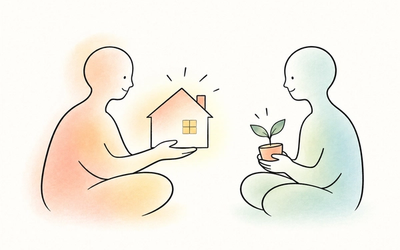
Now imagine a couple sharing a home.
One partner is autistic and needs an orderly environment to feel comfortable and use the space. The other has ADHD and struggles to initiate, organise and finish household tasks. These are the particular people in this example, rather than rules about either diagnosis.
After putting off the kitchen for days, the ADHD partner clears the table and washes the dishes.
“Look what I’ve done! I’m so pleased with myself.”
Their partner sees the remaining clutter.
“But you haven’t finished.”
Later, they explain: “I cannot lie and say it’s amazing. To me, that’s a small amount of cleaning.”
The difficulty here is partly about what is being measured.
One person is measuring the result against the standard the room needs to meet. The other is measuring progress from a difficult starting point.
Clearing the table may be a modest result. Initiating the task, working through competing demands and staying with it may have taken considerable effort.
The visible size of a result does not reveal the full cost of producing it.
There are three different questions:
- Effort: What did this take from you?
- Progress: What changed from where you started?
- Adequacy: Does the result meet our practical needs?
The answers can differ. There may have been substantial effort and meaningful progress, while the kitchen still needs more work.
Recognition that remains truthful
You do not have to say, “The kitchen is perfect,” when it is not.
You could say:
“You got started when that had been difficult, and now we can use the table. I can see why you’re pleased.”
Or, if you do not know what the task involved:
“What was the hardest part of getting this done?”
Curiosity gives you information that looking at the room cannot supply.
There is room here for the other partner’s experience too. Remaining clutter may create sensory distress, interfere with cooking or leave them with more work. Recognising effort does not mean accepting an arrangement that repeatedly exhausts them.
Their experience might be expressed as:
“I understand that this took a lot. I also need a clear worktop to prepare food. Can we work out how to make that happen?”
Neither person’s experience needs to disappear for the other’s to become legitimate.
Before you judge, find out what you are being shown
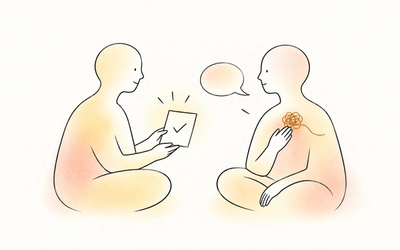
When someone brings you an experience or achievement, pause before deciding whether it would count as significant for you.
Ask yourself:
“Are they asking me to assess the result, understand what happened, or share their relief?”
“Look what I’ve done” may mean: “Please notice that I got past something difficult.”
“This really hurt” may mean: “Please take my experience seriously.”
You can ask directly:
“Would you like me to look at what still needs doing, or enjoy this moment with you?”
You do not need to manufacture enthusiasm or imagine their experience perfectly. Listening to their account and reflecting something specific can be enough:
“Starting was the difficult part, and you managed to start.”
“That caught you off guard.”
“This matters to you.”
Recognition works best when it is offered as contact between equals. A partner may want shared pleasure or acknowledgement, rather than a verdict on whether they have earned praise.
Let their account add to yours
If you often struggle to validate someone, consider whether you are answering a question about their experience with information about your own.
“I would not find that painful.”
“I could do that in five minutes.”
“I would have got over it by now.”
Those statements may be true about you. They leave the other person’s experience unexplored.
Try a different starting point:
“What made this difficult for you?”
“What feels important about what you managed?”
“What do you want me to understand?”
Then let the answer change what you know.
You can keep your standards, your boundaries and your own account of what happened. You can also recognise that another person reached the same moment by a different route, with different resources and a different cost.
Before asking whether something deserves recognition on your scale, ask what it meant on theirs.