After diagnosis: who gets to decide what it means?

By Olena Baeva
Published 6 October 2026
A late diagnosis can explain a great deal.
Why certain environments were exhausting. Why apparently simple tasks were not simple. Why social situations felt effortful, confusing or strangely costly. Why motivation seemed unreliable. Why other people kept describing you in ways that never quite matched your internal experience.
For many people, this explanation brings relief.
But explanation is not the same as identity.
And diagnosis does not simply reveal a finished person who was hidden underneath all along.
A recent systematic review by Meldrum et al. (2026) examined how adults diagnosed with autism and/or ADHD in adulthood described changes in identity after diagnosis. Across 25 studies involving more than 600 people, the authors identified three broad processes: reconfiguring the self, finding the self through others, and emotionally integrating the diagnosis.
The findings are compelling. They also raise a more difficult question:
When a new explanation becomes available, who gets to decide what it means?
When behaviour stops being a moral problem
Before diagnosis, difference still has to be explained.
If there is no language for sensory overload, executive-function variability, masking, monotropism, attentional regulation or social mismatch, people rarely leave the space blank.
Something fills it.
Lazy.
Oversensitive.
Difficult.
Selfish.
Inconsistent.
Unreliable.
Too much.
Not trying hard enough.
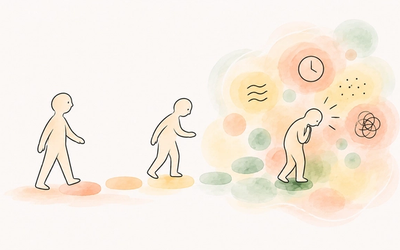
A person may spend decades interpreting nervous-system differences as evidence about their character.
This is one reason late diagnosis can feel so significant. It does not change what happened, but it can change the meaning assigned to it.
An unfinished task may move from I am lazy to starting and sequencing this required more executive capacity than I had available.
Leaving a noisy room may move from I am rude to I had reached sensory capacity.
Needing more recovery after social contact may move from I am antisocial to interaction takes more processing than was visible from the outside.
This is not absolution from responsibility.
It is a change in explanatory model.
And that matters because moral explanations are unusually sticky. If every difficulty is understood as evidence of a defective self, the person is not only managing the difficulty. They are also defending themselves against the verdict attached to it.
Diagnosis can interrupt that process.
It can make an old case eligible for retrial.
But what exactly are we discovering?
Meldrum et al. describe many participants as becoming more authentic after diagnosis. Some felt they could finally “be themselves”, reduce masking, reinterpret their past and develop greater self-acceptance.
This makes intuitive sense.
It also contains a trap.
The language of a “true self” can easily become another rigid story.
Before diagnosis, the person may have been told who they should be.
After diagnosis, they may start being told who they really are.
Those are not necessarily as different as they first appear.
Which version is the authentic one?
The person before diagnosis?
The unmasked person?
The rested person?
The person with accommodations?
The person in an autistic community?
The person at work?
The person who has learned social skills over forty years and has decided they are useful?
There may be no single hidden self waiting to be excavated.
Some adaptations may have been costly and unwanted. Others may have become genuine skills, preferences or chosen ways of relating.
Masking, for example, is often discussed as though it is automatically falsehood.
Sometimes it is.
Sometimes it is survival.
Sometimes it is translation.
Sometimes it is professional skill.
Sometimes it is simply choosing what part of yourself is useful in a particular context.
The more useful question may not be:
Which version of me is the real one?
It may be:
Which parts of how I live are chosen, which are imposed, and which still work for me?
That is a very different task.
Sometimes we recognise ourselves through other people
One of the strongest findings in the review concerns social recognition.
People often understood themselves differently after encountering other autistic or ADHD people.
This is easy to dismiss as simply “finding community”, but something more interesting may be happening.
Other people can change the reference point.
A behaviour that looked strange in one group may look ordinary in another.
An experience that seemed uniquely inexplicable may suddenly have language.
Someone else may describe something you have experienced for decades but never been able to identify clearly enough to name.
Recognition can therefore be epistemic as well as emotional.
We do not always discover ourselves by looking inward.
Sometimes we recognise ourselves because somebody else describes the landscape first.
This is one reason professional validation and peer recognition are not necessarily interchangeable.
A clinician may say, “Yes, that fits autism.”
Another autistic person may say something that produces an entirely different response:
Oh. You do that too.
The second experience does not merely validate diagnosis. It may alter the person's understanding of what counts as normal, possible or permissible.
But even here, belonging does not need to become obligation.
A person does not have to adopt a strong neurodivergent identity.
They do not have to join a community.
They do not have to make autism or ADHD central to how they describe themselves.
Recognition creates possibilities. It should not prescribe identity.
Diagnosis may begin reconstruction, but it may also arrive halfway through it
There is another complication.
Research on late diagnosis often creates a neat sequence:
difficulty → diagnosis → identity reconstruction.
Real life may be less orderly.
Many people begin reconsidering themselves long before formal diagnosis.
They read.
They compare experiences.
They recognise themselves in other people.
They try accommodations.
They stop forcing certain things.
They begin questioning old moral explanations.
Formal diagnosis may then arrive after much of the reconstruction has already begun.
So diagnosis may not be the starting point.
It may be one particularly authoritative event within a longer process of making sense of experience.
That distinction matters.
If diagnosis is treated as the source of identity, clinical authority remains unusually powerful.
If diagnosis is treated as one source of information, the person retains more interpretative ownership.
Positive identity is not the only acceptable destination
There is a subtle pressure in some neurodivergent-affirming spaces to replace negative identity with positive identity.
From:
There is something wrong with me.
To:
I am proudly neurodivergent.
For many people, that shift is important and liberating.
It should still remain optional.
Someone may experience ADHD primarily as disability.
Someone may feel neutral about being autistic.
Someone may dislike diagnostic labels while still finding the explanatory framework useful.
Someone may value community.
Someone else may not.
Someone may unmask extensively.
Another person may deliberately continue using learned social strategies because the benefits outweigh the cost.
The endpoint does not have to be a positive neurodivergent identity.
Perhaps the more important endpoint is an owned identity.
Positive, negative, mixed, political, private, central, peripheral or still uncertain.
But increasingly chosen.
Diagnosis can expand authorship. It can also replace one authority with another
The Neurodivergent Authorship Framework asks who has authority over the interpretation and direction of a person's life.
Late diagnosis can expand that authorship enormously.
It can remove explanations that never fitted.
It can reduce shame.
It can legitimise accommodation.
It can make previously invisible nervous-system demands visible.
It can open new social worlds.
But diagnosis can also become another authority.
A person who once asked:
What am I supposed to be?
may begin asking:
What is an autistic person supposed to be?
The vocabulary has changed.
The problem has not.
Perhaps the work after diagnosis is therefore not simply identity reconstruction.
It is learning to use diagnosis without being used by it.
Not asking only:
What does autism or ADHD explain about me?
But also:
What do I want to do with that explanation?
What old judgements no longer belong?
What responsibilities remain?
Which accommodations help?
Which adaptations do I want to keep?
Which expectations can I stop meeting?
Which identities feel useful?
Which do not?
And what remains unexplained?
Meldrum et al. show that late diagnosis can reorganise memory, belonging, self-understanding and emotional life.
That matters.
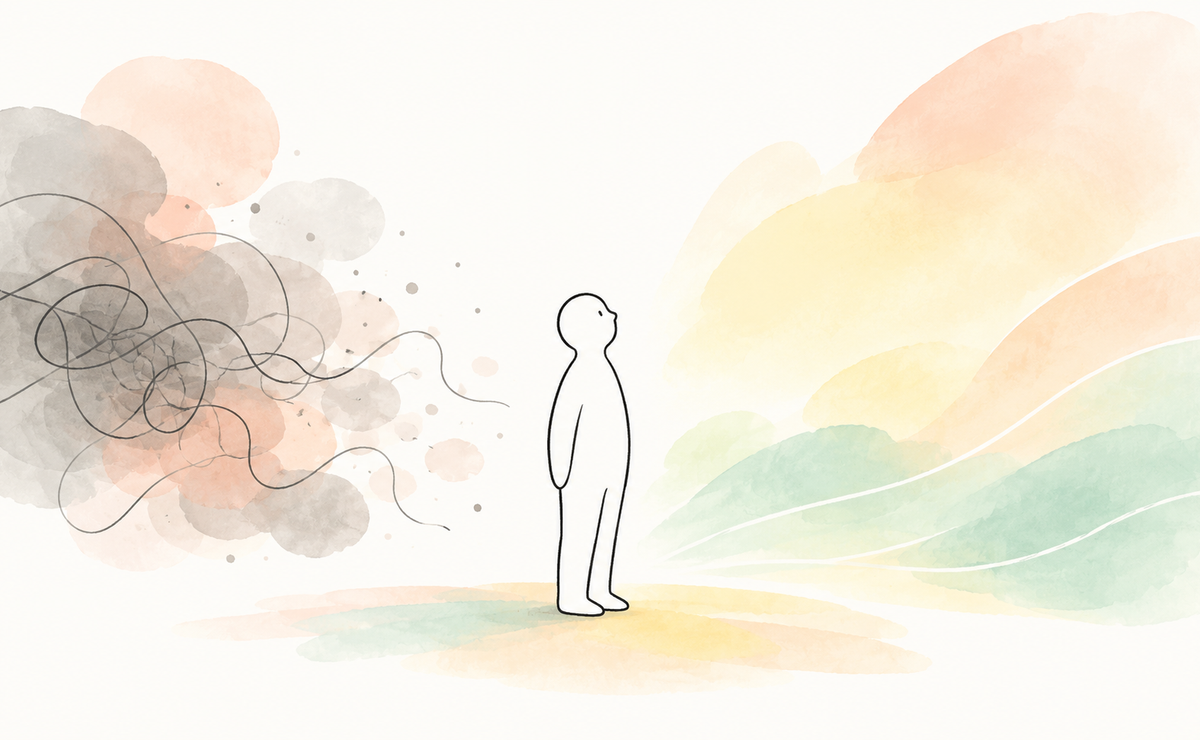
But perhaps the most important possibility is not finally discovering who you really are.
It is gaining enough explanatory freedom to decide, with greater accuracy and less moral noise, who you want to become next.
Reference
Meldrum, P., Johnson, B. P., Lo, B. C. Y., Bedelis, M. L., & Rabba, A. S. (2026). “You Become Yourself, Your Full Self, the True Self”: A systematic review of neurodivergent adults’ experiences of identity reconstruction following diagnosis of autism and/or ADHD in adulthood. Autism in Adulthood. https://doi.org/10.1177/25739581261427260