Meltdowns and shutdowns: when “too much” changes how we respond

By Olena Baeva
Published 13 April 2026
You have managed the meeting, the journey and the conversation. Then someone asks a simple question, and you cannot bear it. Their attempt to reassure you makes things worse. You need them to stop talking, but explaining that would require more words than you have available.
At another time, the same question would have been easy. The same person’s voice might have been welcome.
What changed?
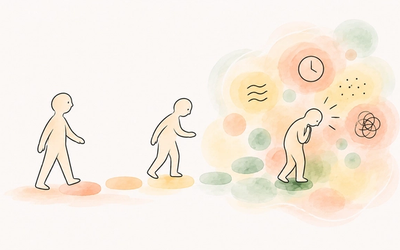
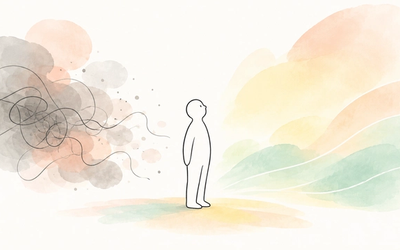
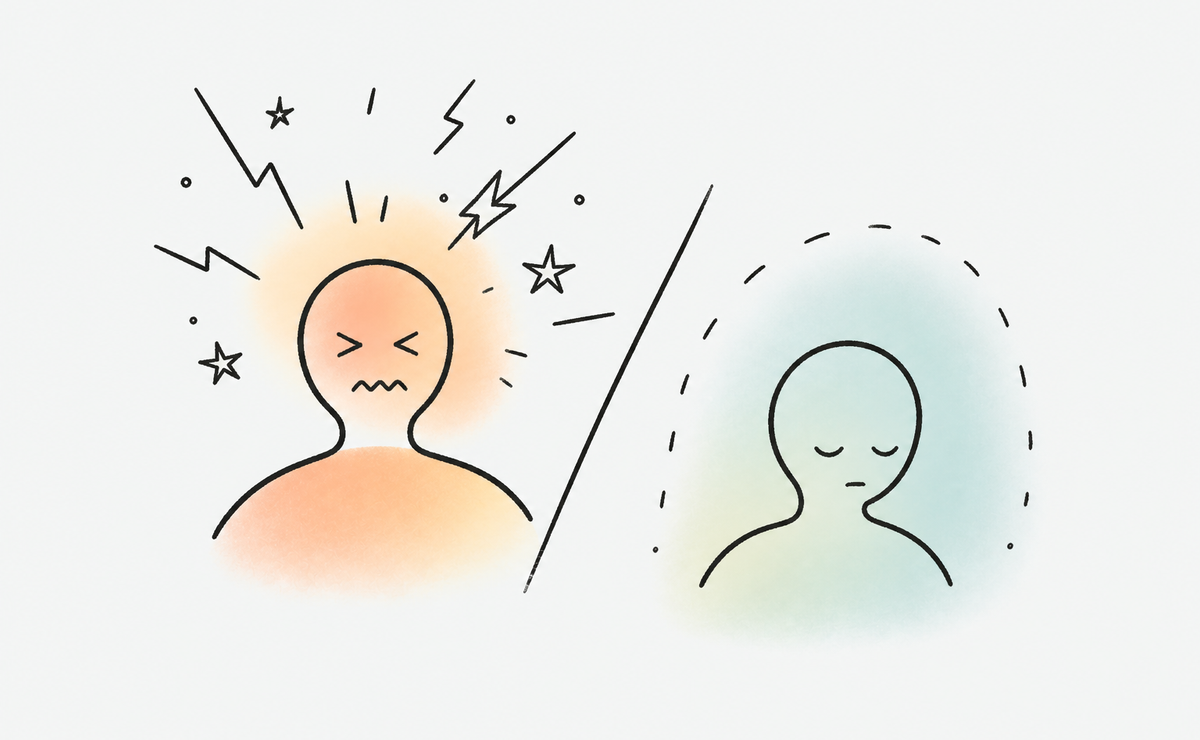
Overstimulation can change more than the intensity of our feelings. It can change how we respond: what reaches us, what feels manageable and which actions remain available. We may become louder and more urgent, or quieter and harder to reach. Sometimes one gives way to the other.
Understanding that change helps us respond to what is happening, rather than what we think should be happening.
When everything becomes too much in the same way
Usually, we can distinguish between a small request and a large one. Getting a glass of water is different from preparing dinner. Answering one question is different from resolving a disagreement.
As overload increases, those differences may become harder to use. Everything requires something we no longer have to give. “Just tell me what you need” can feel as impossible as completing the task that overwhelmed us.
Almost a century ago, Ivan Pavlov observed something relevant to this idea. In experiments with dogs, he found that established responses changed under strain. Strong and weak signals could begin to produce similar responses. He called this equalisation: signals that normally had different effects were no longer being responded to so differently.
Human overwhelm is more complex than a laboratory reflex. Still, the observation offers a useful question: has the person reached a point where even a small demand can no longer be experienced as small?
If so, making the request sound easier may not help. “It will only take a minute” still means another minute of doing something.
When the small thing gets the biggest reaction
Someone copes with a demanding day and then cries because a familiar item has been moved. They handle a crisis but cannot answer a message afterwards. People around them compare the two events and conclude that the reaction makes no sense.
Pavlov also described a paradoxical state, in which weaker signals produced stronger responses than stronger signals. The usual relationship between the size of the input and the size of the response had changed.
This does not tell us exactly why someone breaks down over a misplaced item. Often, the day has already used their available capacity. The item also means searching, changing plans or losing something familiar when familiarity matters most.
But it reminds us that we cannot judge a reaction by measuring only the last event. A small event can meet a person in a very different state from the one in which they managed something larger.
The build-up is explored in sensory overload, monotropism and doing, managing and judging. What matters here is that, once capacity changes, yesterday’s response is no longer a reliable guide to today’s.
When comfort stops being comforting
This change can be particularly confusing in close relationships. Someone reaches for a hug and is pushed away. They offer reassurance and receive an angry response. They ask what happened, hoping to understand, and the other person becomes less able to speak.
The intention is care. The immediate effect is more input.
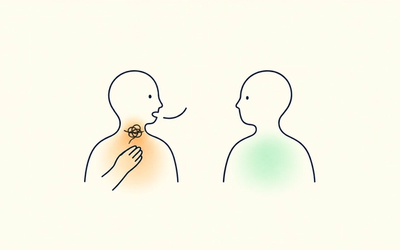
A hug adds touch. Reassurance adds language to process. A question adds a decision about what to say and how to say it. Something normally welcome may become unbearable because receiving it now requires capacity that is unavailable.
Pavlov described a further change, the ultraparadoxical state, in which learned responses reversed: a signal that usually brought out a response stopped doing so, while one that usually held it back could bring it out. These were changes in conditioned responses, rather than a finding that kindness becomes threatening. His original observations nevertheless draw attention to an important possibility: the same input can have a different effect when the system receiving it has changed.
For us, the practical implication is simple. We need to notice whether our help is helping now. Repeating reassurance more insistently does not restore its comforting effect.
What might be happening inside?
Pavlov explained what he observed using the knowledge available at the time. He proposed that excessive stimulation could bring about protective inhibition: the nervous system would begin to limit responding when pushed beyond its working capacity.
Modern neuroscience offers a more detailed possible explanation for some changes between active distress and becoming still. A small area in the midbrain, the periaqueductal grey, helps organise defensive responses. Working with other brain regions, it contributes to whether the body moves urgently to escape or becomes immobile.
Research has identified interacting pathways involved in freezing and flight. A 2025 experiment found that stimulating the same pathway at different strengths could produce either response. Becoming still can therefore be an actively organised response; it does not necessarily mean the brain has simply run out of activity.
These findings, largely from animal research, offer a possible mechanism to explore in autistic overload. They have not yet established exactly how autistic meltdowns and shutdowns arise.
The useful idea is that overstimulation may alter the way responding is organised. More distress does not always produce more visible activity.
Meltdown: when stopping becomes difficult
During a meltdown, crying, speech or movement may become difficult to interrupt. There can be an urgent need to leave, stop the noise or make the other person understand. Someone may repeat the same words because they cannot find another way through the situation.
Being able to speak does not necessarily mean being able to discuss. The person may produce many words while having little capacity to consider new information, choose a different response or bring the exchange to a close.
This is why another explanation can intensify the situation. It creates more material to answer when answering is already becoming difficult to stop.
A useful response makes stopping possible: ending the immediate discussion, allowing distance and removing avoidable input. If anyone is at risk of injury, safety takes priority. Understanding overload does not require anyone to remain within reach of harm.
Shutdown: when starting becomes difficult
During a shutdown, the difficulty may be initiating an answer or movement. Someone can know that they want water without being able to get up. They may hear a question and have an answer internally, but be unable to turn it into speech.
From outside, this can look like ignoring, refusing or no longer caring. From inside, it may feel like being present without access to the means of showing it.
Quietness is therefore not enough to establish that someone has recovered. Research on defensive responses also shows that outward behaviour and bodily stress can change in different combinations.
A familiar written message or gesture may be easier than speech. Sometimes any response is too much. Support then means reducing the need to demonstrate distress or explain the silence, while remaining attentive to safety and basic needs.
Meltdown and shutdown do not have to happen in order. Neither can be measured reliably by how disruptive it looks to someone else.
Learning the change, rather than judging the reaction
Once there is enough capacity to reflect, we can look for the moment when responding changed. When did small requests become impossible? When did reassurance begin to irritate? When did speech become repetitive, or inaccessible?
These observations can become a personal guide. “Questions are starting to hurt” may be a more useful early signal than trying to name an emotion. An agreed gesture can make a pause possible before explaining the need for one becomes another demand.
The aim is to preserve choice where it is still available and help it return where it has narrowed. In relationships, that includes making room to revisit unfinished conversations and repair harm, as explored in love and nervous-system differences.
We do not have to choose between believing someone’s overload and taking its consequences seriously. We can recognise what became impossible, acknowledge what happened and change the conditions around it.
Agency grows when our own observations count: when “this is becoming too much” is enough information to act on, before our nervous system has to make the point more forcefully.