Autistic burnout and FND: when capacity becomes unreliable

By Olena Baeva
Published 27 February 2026
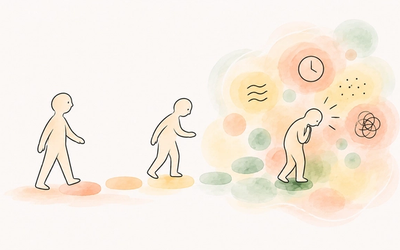
There is a particular fear in being able to do something yesterday and finding it inaccessible today. The intention is there. The familiarity is there. Yet speech, movement or coordination no longer follows reliably.
For an autistic person experiencing burnout, this can raise a difficult question: could prolonged overload contribute to functional neurological symptoms?
A plausible connection exists. The useful formulation is that burnout may create conditions in which functional symptoms can emerge or persist in some people. That is a working hypothesis, rather than an established progression from burnout to Functional Neurological Disorder (FND).
Its value lies in what it asks us to notice: the relationship between a person’s available capacity, the demands placed on them, and the conditions under which function becomes accessible.
What the research actually connects
Research increasingly identifies an association between autism and FND. A small specialist clinic study found clinically probable autism in eight of sixteen participants with FND. Its size and setting prevent generalisation, but it illustrates how autistic needs may remain unrecognised in neurological care.
This research concerns autism and FND. It does not establish burnout as the link between them.
Researchers exploring possible mechanisms consider differences in processing bodily signals, attention and responses to uncertainty alongside adversity, stigma and barriers to appropriate healthcare. These offer several possible routes into vulnerability. There is no single explanation that applies to every autistic person with functional symptoms.
The question worth developing is narrower: could the sustained strain involved in burnout make an already vulnerable system less able to maintain reliable function?
The hidden cost of appearing capable
Someone may maintain everyday functioning through considerable conscious effort: rehearsing conversations, tracking expectations, suppressing sensory responses and carefully organising actions that others assume happen easily.
From the outside, the result is visible. Its operating cost is largely hidden.
This creates a misleading baseline. “You used to manage” can mean “you used to absorb the cost without us seeing it”. Previous performance tells us what happened; it does not tell us whether that performance was sustainable.
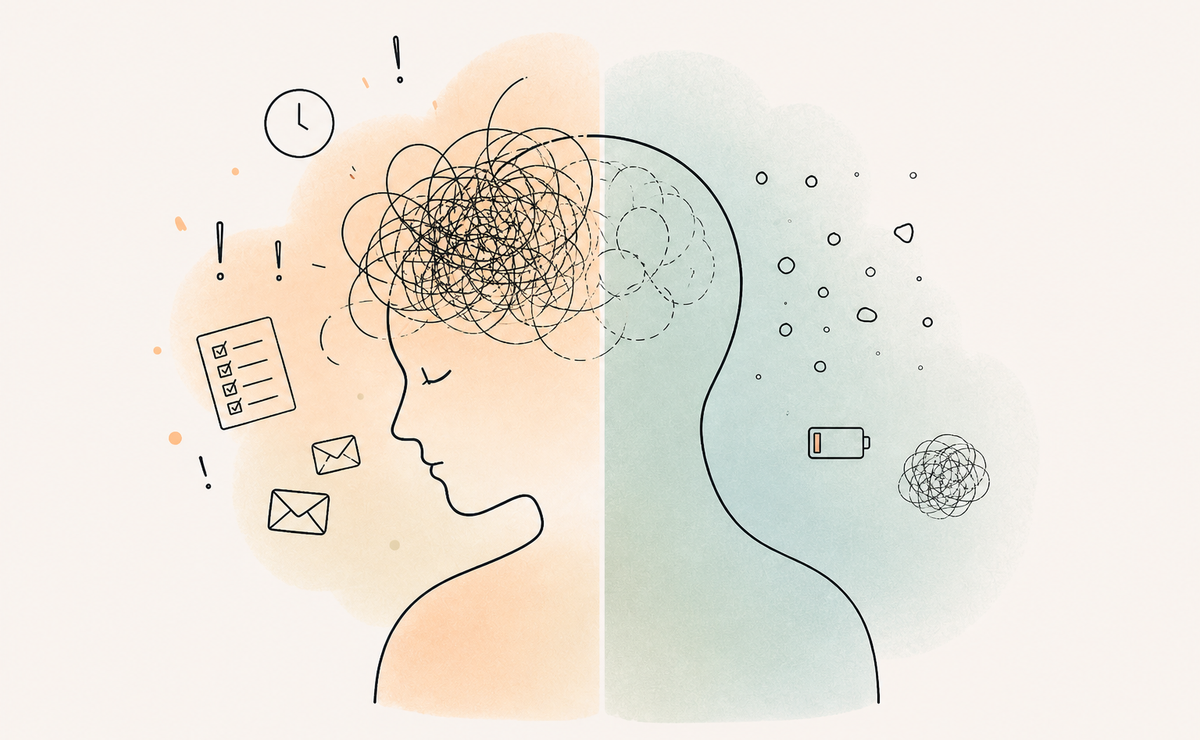
The formulation proposed here is that burnout may expose how much functioning depended on effortful compensation. As capacity diminishes, there is less room to manage additional noise, uncertainty, pain, social interpretation or scrutiny.
That does not, by itself, explain FND. It does suggest why assessing a symptom without understanding the person’s wider load may leave out something clinically consequential.
Where the possible connection sits
Movement and perception depend on the brain coordinating incoming information, attention and expectations. Current accounts of FND explore how these processes can become disrupted, affecting the experience and control of bodily function.
Burnout could plausibly contribute to that disruption through exhaustion, sustained overload and reduced flexibility in managing competing demands. The proposed connection sits here: in the conditions surrounding the coordination of function.
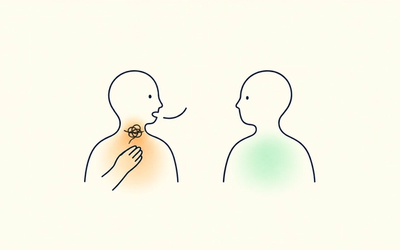
Consider the difference between speaking with a familiar person in a quiet room and speaking during an unfamiliar assessment. The second situation adds interpreting questions, monitoring the clinician’s response, tolerating the room and anticipating what a misunderstood answer might mean.
The spoken task may look similar. The total task is different.
If speech becomes inaccessible in one setting, that difference deserves investigation. It does not establish FND: speech loss during overload can have other explanations. Nor does being able to speak elsewhere make the difficulty voluntary.
Variability is information about conditions
Fluctuating capacity can become a credibility problem. A person manages an activity once, and that moment becomes evidence that they should always manage it.
A more useful question is: what made that instance possible?
Was the environment quieter? Was the activity familiar? Could the person control the pace? Did they have enough capacity beforehand, and what happened afterwards?
These questions do not replace neurological examination. FND requires positive clinical evidence; neither variability nor normal investigations alone establishes the diagnosis.
They do, however, help prevent a damaging inference: that occasional access equals dependable access.
For someone experiencing both burnout and FND, the difference may be central to planning support. A successful attempt can show a possibility worth developing. It does not automatically demonstrate readiness for greater overall demand.
When recovery becomes another performance
This formulation has a practical implication: treatment itself belongs in the account of total load.
An appointment may involve travel, unfamiliar sensations, rapid instructions, repeated explanations and pressure to demonstrate improvement. A person might complete the exercises while losing the capacity to prepare food or communicate later that day.
If progress is measured only inside the appointment, that cost can disappear.
Where burnout and FND coexist, a useful clinical question is therefore: does this approach help the person regain function at a cost they can sustain?
This supports individual adaptation: clearer instructions, fewer simultaneous demands, predictable sessions, communication alternatives and attention to delayed effects. These are practical implications of the formulation, rather than a proven treatment protocol for burnout-associated FND.
Load reduction and appropriate rehabilitation can be considered together. The balance needs to reflect the person’s presentation and response, including any coexisting conditions.
What are we helping someone return to?
There is another question beneath “getting back to normal”: was the previous arrangement liveable?
Returning to the same sensory exposure, masking demands and lack of support may restore an appearance of normality while recreating the circumstances in which capacity became unsustainable.
Within this formulation, recovery includes greater authorship over the conditions of participation: some control over pace, communication, environment and when to stop. Those choices make it possible to discover what is sustainable without every limit becoming a negotiation over credibility.
We do not need to prove that burnout causes FND to take burnout seriously when the two coexist. We need a formulation that gives neurological symptoms proper assessment and gives the person’s actual living conditions a place in care.
The aim is reliable access to more of life, with enough capacity left to live it.
New neurological symptoms need medical assessment; sudden weakness or speech changes require urgent help.