When someone’s name gets stuck
By Olena Baeva
Published 13 September 2026
Alexinomia, autistic experience and making contact without forcing speech
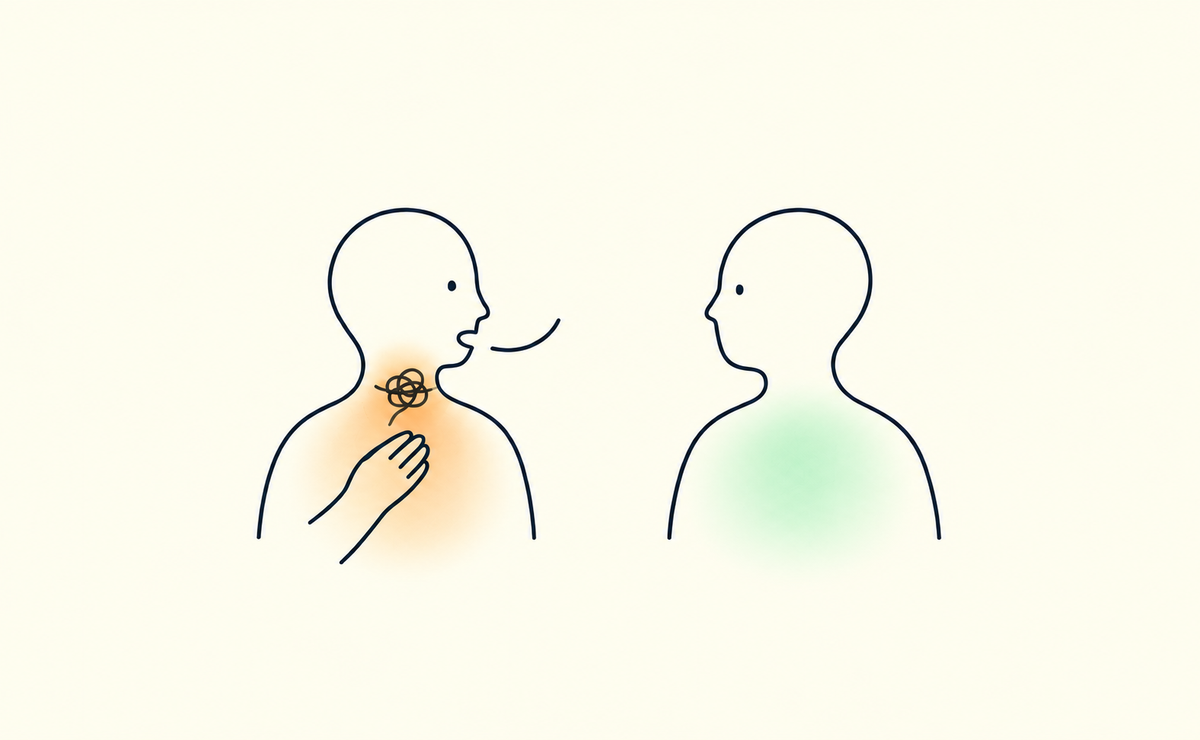
You know the name. You have not forgotten it. You might be able to think it, type it or say it when the person is absent. Yet, when you need to address them, your face and throat will not organise themselves around the sounds. The name seems to stop in your throat, sink into your chest or sit painfully close to your heart.
Then another layer arrives: What if I pronounce it wrongly? What if I use the wrong name? What if my hesitation looks strange? The possibility feels so exposing that you cannot approach the person, even when you need help.
For some people, this is not ordinary shyness. It is a specific loss of access to a word they know.
There is a word for this experience
Researchers have proposed alexinomia, meaning ‘no words for names’, for the difficulty or inability to use another person’s name in direct communication.
In the first exploratory study, participants described distress, shame, bodily discomfort and avoidance that could impair relationships and everyday interaction. The study was small, 13 women, and cannot tell us how common alexinomia is (Ditye, Rodax & Welleschik, 2023).
A later analysis examined 184 first-person posts found across online forums and blogs. People wrote about names catching in the throat, feeling painfully intimate, triggering fear of mispronunciation, or making it impossible to attract someone’s attention. They also described workarounds: gestures, descriptions, nicknames, messages and simply saying ‘hey’ (Bergert, Welleschik & Ditye, 2024).
Alexinomia is an emerging research term, not a diagnosis. Some autistic people strongly recognise the experience, but research has not established it as an autistic trait or identified one cause. Social anxiety may contribute for some people; it does not make the experience imaginary, and it may not explain it completely.
Why can one name carry so much weight?
A name is not merely a label. Saying it can summon attention, claim familiarity, signal closeness or position one person in relation to another. That is a great deal of social information packed into a few sounds.
For an autistic person, the moment may also contain uncertainty about timing, tone, status, pronunciation and the other person’s reaction. A history of being corrected, misunderstood or treated as socially ‘wrong’ can make the risk feel earned rather than irrational. The nervous system may apply a brake just when deliberate speech is most needed.
The muscular feeling is real, but it does not by itself prove a problem with the facial or throat muscles. A careful description is an embodied speech block: the intention and the name remain present, while access to saying it changes under social demand.
This is why variability matters. Someone may say the name alone, type it, use it when speaking about the person, or manage a surname but not a first name. That does not make the difficulty insincere. Context-dependent access is still access difficulty.
Making contact without forcing the name
The immediate goal does not have to be ‘say names normally’. A better first goal is: make connection and help reliably accessible.
- Move into the person’s visual field, wave or say, ‘Excuse me, could I ask you something?’
- Use a message, a call, an agreed gesture, a title, a surname or a mutually comfortable nickname.
- Carry a phone note or card saying, ‘Speech is difficult right now. Please give me a moment or let me type.’
- Make sure urgent help never depends on producing one person’s name: identify several people, places or written routes for asking.
If it feels safe, a brief explanation can prevent silence being mistaken for distance:
‘I have a speech block around people’s names. I know your name and care about getting it right. If I wave or say “excuse me”, I’m not being rude.’
If a person wants to experiment, practice can be gradual and consensual: type the name; listen to it; mouth or say it alone; use it in a sentence about the absent person; then try one agreed, low-pressure exchange. Stop if practice becomes flooding. Success means greater choice, not performing normality.
When the problem extends beyond names, affects many speaking situations, or makes help inaccessible, a neurodiversity-affirming speech and language therapist or mental-health professional can help distinguish it from word-finding difficulty, motor-speech conditions, or selective mutism, a broader pattern of being unable to speak in particular situations (ASHA).
The name may remain stuck. The relationship does not have to. Communication succeeds when the person can reach another human being, not only when one culturally preferred word comes out.