When one small change changes everything: gestalt perception and hygge

By Olena Baeva
Published 24 October 2026
Why feeling safe in a familiar world can make exploring an unfamiliar one possible.
Imagine two people driving through beautiful countryside. They are enjoying the journey when one notices a small road turning off into the hills.
“Shall we see where it goes?”
For one person, the suggestion is delightful. An unexpected road might lead to a wonderful view, an interesting village or an experience they would otherwise have missed.
For the other, the question produces an immediate bodily jolt.
They had a plan. They knew where they were going, approximately how long it would take and what would happen next.
Now, suddenly, they don't.
One person experiences possibility. The other experiences a loss of orientation.
It would be easy to describe this as a difference between spontaneity and rigidity, or between an adventurous person and an anxious one.
But there may be something more fundamental happening: the two people may not be experiencing the same perceptual event.
Gestalt perception: when a detail changes the whole
Olga Bogdashina, who has written extensively about autistic sensory experiences, describes a phenomenon she calls gestalt perception.
In her account, some autistic people experience a situation as a whole configuration of sensory information, with less automatic separation between what is relevant and what belongs in the background.
Imagine entering a familiar room.
You recognise the furniture, the lighting, the sounds, the arrangement of objects. You know where everything belongs and what usually happens there.
Now imagine that something changes.
For one person, the change is simply a new detail within an otherwise familiar environment.
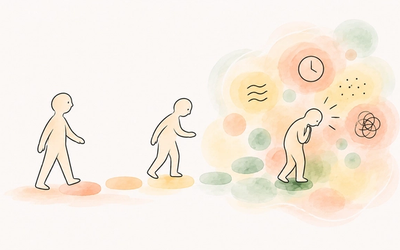
For another, the changed detail may alter the experience of the entire scene. The room is still recognisable, but it no longer feels quite like the room they knew.
The distinction is subtle but important.
The challenge may not be the change itself, but the need to reorganise the whole experience around that change.
This is one proposed account of autistic perception, rather than an established explanation for all autistic people. Research into local and global perceptual processing shows considerable variation, including evidence that integrating information into a global whole may take longer for some autistic people.
Nevertheless, the description offers a useful way of thinking about why seemingly minor changes can have disproportionate consequences.
When novelty comes with a processing cost
Return to the countryside drive.
The adventurous person sees a new road. Their existing understanding of the journey remains largely intact. The unexpected turn adds something interesting.
The other person may have to reorganise several things simultaneously: the destination, timing, route, expected surroundings, possible difficulties, and whether there will be an opportunity to return.
There is also the sudden transition itself.
The body may register the change before the person can articulate why it matters.
What looks like hesitation, resistance or an unnecessarily strong reaction may actually be the beginning of substantial cognitive and sensory work.
The person might eventually enjoy the detour enormously. They may discover a beautiful place and feel delighted that they went.
But the enjoyment does not cancel the processing cost.
Something can be wonderful and overwhelming at the same time.
This may help explain why holidays, celebrations and other supposedly relaxing experiences can be exhausting for some neurodivergent people.
An unfamiliar hotel is not merely a familiar bedroom somewhere else. The sounds, smells, lighting, bed, bathroom, routines and expectations are different.
Even pleasurable novelty still requires processing.
And if somebody has been processing unfamiliar information all day, one additional unexpected event may exceed their remaining capacity.
Hygge: the experience of being sheltered
This is where the Danish concept of hygge becomes particularly interesting.
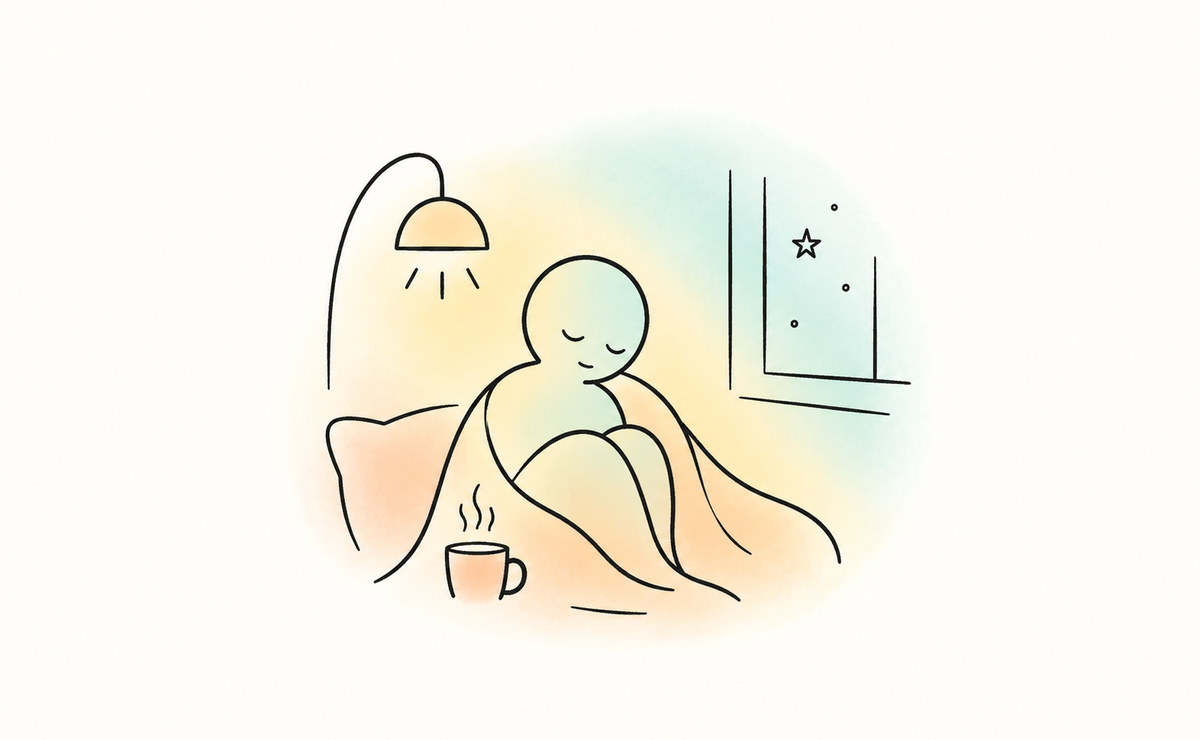
Hygge (pronounced approximately “hoo-gah”) is often translated as cosiness. It evokes comfortable surroundings, warm drinks, companionship, soft lighting and life's quieter pleasures.
But its meaning extends beyond cosy interiors. The word has Norwegian roots, and one historical meaning associated with it is being protected from the outside world.
It suggests an atmosphere where people can feel comfortable, at ease and at home.
The psychological significance is not the candlelight or the blanket. It is the experience of not having to remain on alert.
For someone whose sensory and perceptual processing makes unfamiliarity demanding, a familiar environment can offer something precious.
There is less to investigate. Fewer surprises to accommodate. Less need to continually work out what is happening.
The environment is sufficiently predictable that attention can be released from constant orientation.
A familiar room, a recognisable routine, a particular chair, or simply having somewhere quiet to retreat may provide that experience.
Importantly, hygge is not necessarily about being together. Sometimes feeling sheltered requires solitude.
And it cannot be imposed. What one person finds cosy, another may find overstimulating or intrusive.
Can hygge make adventure possible?
This creates an apparent paradox.
If familiarity supports comfort, does that mean a person who needs familiarity must avoid novelty?
Not necessarily.
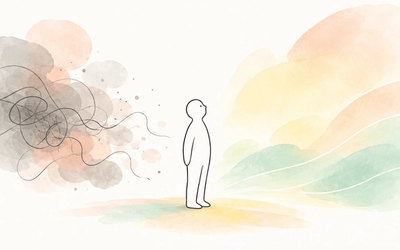
Sometimes the security of the familiar is exactly what makes novelty accessible.
Think of a harbour.
A boat does not need to remain in harbour to be safe. But knowing where the harbour is, and being able to return, changes the experience of sailing into unfamiliar waters.
The same principle can apply to everyday life.
Someone may be willing to visit an unfamiliar city if they have a quiet hotel room to return to.
They may enjoy spontaneous activities if they know approximately how long they will last and can decline without disappointing anyone.
They may welcome a suggested change of plan when they are given time to understand it rather than being carried into it without warning.
The aim is not to eliminate surprises. It is to make surprises manageable and, where possible, chosen.
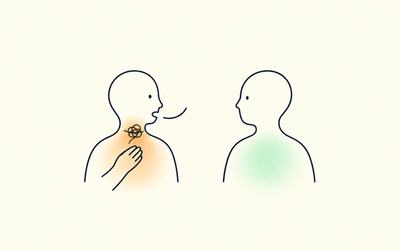
In relationships, this might mean one partner sharing a little of their thinking before changing direction:
“I've noticed an interesting road. We have plenty of time and can turn back whenever we want. Would you like to explore it?”
The destination remains unknown. The invitation retains its spontaneity.
But now the other person has a recognisable framework: why the change is being suggested, what it might involve, and what choices remain available.
The difference between an adventure and an intrusion can sometimes be the opportunity to prepare and choose.
Hygge between two people
There is also a relational dimension.
A partner can become associated with comfort, predictability and protection. But closeness alone does not guarantee this feeling.
Unexpected touch, abrupt changes of tone, pressure to respond immediately, or difficulty leaving an interaction can make even a loving relationship feel demanding.
Conversely, knowing that a partner will announce their arrival, explain a change, respect a pause or allow separate activities can make togetherness easier.
Sometimes two people need a little distance to remain comfortable with each other.
The goal is not permanent closeness, but an appropriate distance at which connection remains welcome.
This is a different understanding of relational security.
Rather than expecting a loving person to tolerate every interruption or adapt instantly, we can ask what conditions allow each person to remain available for connection.
A sense of being taken care of may come not from another person doing everything for us, but from knowing that our particular way of experiencing the world has been considered.
A world that becomes familiar enough
Research with autistic adults supports the importance of predictability, environmental adjustments, opportunities for recovery and control over sensory experiences.
However, gestalt perception and hygge are not two parts of a single established psychological theory. Their connection is a proposed way of understanding experience, rather than a scientifically validated intervention.
What makes the connection useful is the shift in perspective.
Instead of asking why someone cannot tolerate a small change, we might ask how much of their perceptual world has to be reorganised when that change occurs.
Instead of assuming a person dislikes adventure, we might wonder what would make adventure accessible.
And instead of treating comfort as the opposite of growth, we might recognise that comfort can provide the conditions from which exploration becomes possible.
Perhaps the most important distinction is between being protected from the world and feeling sufficiently protected within it.
The first can narrow a person's life. The second can expand it.
We do not always need a smaller world. Sometimes we need a sufficiently safe place from which to encounter a larger one.
References and further reading
- Bogdashina, O. (2003). Sensory Perceptual Issues in Autism and Asperger Syndrome. Jessica Kingsley Publishers.
- Van der Hallen, R., et al. (2015). Global processing takes time: A meta-analysis on local-global visual processing in ASD. Psychological Bulletin, 141(3), 549–573.
- Mottron, L., et al. (2006). Enhanced perceptual functioning in autism. Journal of Autism and Developmental Disorders, 36, 27–43.
- “It Is a Big Spider Web of Things”: Sensory Experiences of Autistic Adults in Public Spaces. Autism in Adulthood.
- Hygge: Danish culture and the art of everyday comfort. Denmark.dk.