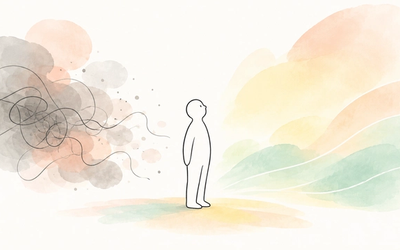
The skill remains. The capacity to access it changes.

By Olena Baeva
Published 9 October 2026
Why knowing how to do something does not mean being able to do it whenever it is needed.
‘But you managed it yesterday.’
This sounds like a reasonable observation. If someone demonstrated an ability yesterday, why should they be unable to demonstrate it today?
Perhaps because yesterday was different.
Yesterday, they had slept. There was no background noise. Nobody was waiting for an answer. They were not in pain, overwhelmed, hungry or trying to manage three competing demands.
Today, the circumstances have changed. The skill may not have.
We often treat demonstrated ability as evidence of permanent, reliable availability. Once someone has shown that they can do something, we expect them to reproduce it whenever necessary.
And when they cannot, we start looking for explanations in motivation, effort, attitude or character.
But what if we are asking the wrong question?
Having a skill is not the same as being able to access it
Consider someone who can communicate thoughtfully, understand another person's perspective and resolve disagreements.
These are skills they have developed and demonstrated.
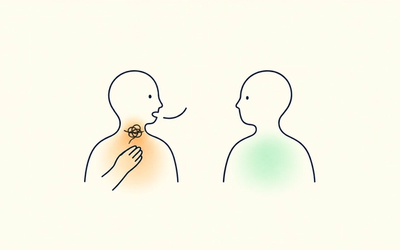
Yet, during a heated conversation, the same person may struggle to find words, follow the argument or consider an alternative perspective. They may become silent, repetitive, apparently rigid or desperate to leave.
Has their ability to communicate disappeared?
Not necessarily.
The acquired skill may remain intact, while their current capacity to access and use that skill has become reduced.
This distinction matters because skills and the capacity to access them are not the same thing.
A skill is something a person has learned or developed. Access depends on whether the conditions allow that skill to be recruited and used at a particular moment.
Those conditions may involve attention, working memory, sensory processing, fatigue, emotional activation, physiological demands and the complexity of the task itself.
A person can know what to do without currently having the resources to do it.
This is not unique to neurodivergent people, although differences in sensory processing, executive functioning, attention and regulation may make fluctuations in accessibility particularly consequential.
What the nervous system makes available
In 2026, Gomez Uncu and Morejón Rodríguez proposed the Interoceptive Communication Model (ICM 2.0), a framework for understanding why previously demonstrated skills may become less accessible under changing physiological conditions.
The model considers how autonomic activity, interoception (the processing of signals from within the body), sensory demands, stress and environmental conditions interact with cognitive and behavioural functioning.
One particularly interesting proposition is that access does not necessarily decline gradually.
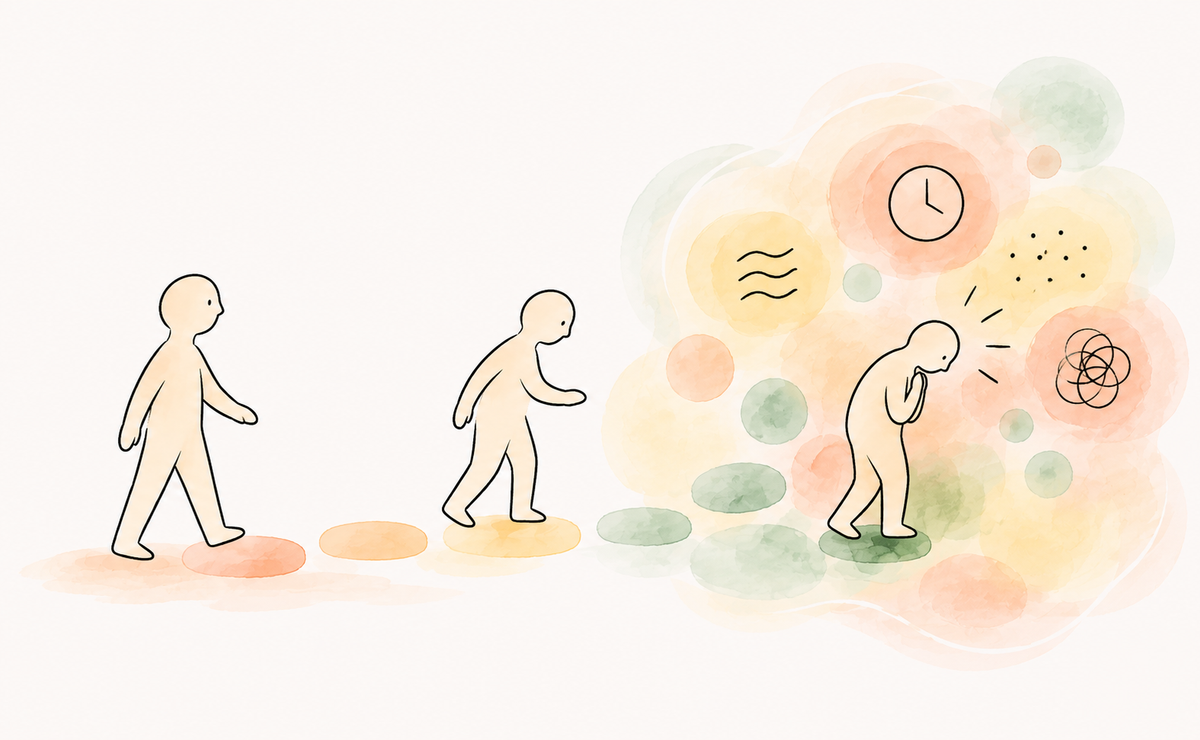
Someone may accommodate increasing demands for hours, maintaining conversation, concentration and apparent competence. Then one additional request produces a disproportionate change.
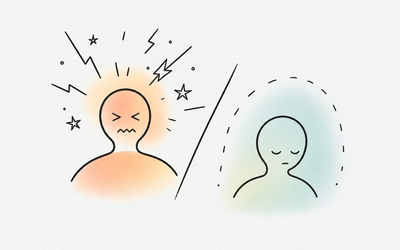
Their thinking becomes slower. Words become difficult to retrieve. Decision-making becomes overwhelming. They may experience a meltdown or shutdown.
The final request may have been relatively small. The cumulative demands were not.
And removing that final demand does not necessarily restore access immediately.
Recovery may take substantially longer than the transition into overwhelm.
This is an important conceptual distinction, although ICM 2.0 remains a theoretical framework requiring empirical validation. It offers a way to investigate fluctuating functioning, not proof of what is happening inside any particular person.
The problem with ‘you can when you want to’
Imagine an ADHD adult who can plan an elaborate holiday but struggles to make a straightforward telephone appointment.
Or an autistic person who speaks fluently about a specialist interest but becomes unable to explain their needs during an unexpected confrontation.
Or someone who understands emotional regulation strategies perfectly well during therapy but cannot retrieve or use them during intense distress.
From the outside, the inconsistency can look suspicious.
If they can organise a holiday, why not an appointment?
If they can speak for an hour about one subject, why not answer a simple question?
If they know how to regulate themselves, why are they not doing it?
But these comparisons assume that different activities require the same resources, and that those resources are equally accessible across contexts.
They do not.
Interest, predictability, initiation demands, processing time, sensory conditions, emotional significance and perceived consequences can make apparently similar tasks profoundly different.
Evidence that a skill exists is not evidence that access to it is unlimited.
This does not mean motivation never matters, or that every difficulty represents reduced accessibility. It means that inconsistent performance, by itself, tells us very little about why the inconsistency exists.
When inaccessibility becomes a relationship problem
This distinction becomes particularly important in intimate relationships.
Imagine two partners trying to resolve a disagreement.
One wants to talk immediately because uncertainty is distressing. The other needs time to process but cannot explain that need clearly while overwhelmed.
The first partner experiences silence as disinterest or rejection.
The second experiences continued questioning as increasing pressure.
Both may genuinely want resolution.
Yet the harder one tries to obtain reassurance, the less accessible the other's communication skills may become.
Later, when the physiological and relational demands have reduced, the previously silent partner may articulate their experience with remarkable clarity.
‘Why couldn't you just say that earlier?’
Because the ability to formulate that explanation now does not establish that it was accessible earlier.
This does not make the first partner's distress imaginary or unimportant. Nor does it mean that the second partner has no responsibility for how their withdrawal affects the relationship.
It suggests that responsibility and accessibility need to be considered together.
Perhaps the conversation needs a different pace. Perhaps a written message is more accessible than speech. Perhaps an agreed return time would protect one partner from uncertainty while allowing the other to recover.
The solution may require changing the conditions of communication rather than repeatedly demanding the same performance under conditions in which it becomes inaccessible.
Inability, inaccessibility or unwillingness?
There is an important complication.
We should not turn accessibility into another universal explanation for human behaviour.
Sometimes a person has not acquired the necessary skill. Sometimes a disability imposes a genuine functional limitation. Sometimes the person has the skill and can access it but does not want to do what is being requested.
And sometimes the request itself is unreasonable.
Being able to communicate does not create an obligation to participate in every conversation. Being able to accommodate another person does not mean consenting to unlimited accommodation.
We therefore need to distinguish at least three questions:
- Skill: Has this person learned or demonstrated what is being asked of them?
- Accessibility: Do they currently have the resources and conditions needed to use that skill?
- Willingness: Is this something they actually choose or consent to do?
These questions can interact, but they should not be collapsed into one another.
A person may be willing but unable to access the skill.
They may have full access but reasonably decline.
They may want to cooperate but lack both the skill and the necessary support.
We cannot reliably distinguish these possibilities through performance alone.
What changes when we ask about accessibility?
Instead of immediately teaching another strategy, repeating an instruction or asking someone to try harder, we could investigate the conditions under which a skill becomes available.
When does it work?
What is different when it does not?
Does the person need more processing time, fewer simultaneous demands, a different communication channel or relief from sensory pressure?
Does access return after rest, or only when particular relational conditions change?
Could the task itself be redesigned?
This is not about making someone permanently calm or eliminating every challenge. Different skills require different conditions, and some people function best with movement, stimulation, urgency or intense interest.
Nor should the person experiencing reduced access always carry responsibility for restoring it. Environments and relationships can be adjusted, and accommodations need not be earned through repeated demonstrations of distress.
Sometimes new skills are necessary. Sometimes practice helps. Sometimes the most effective intervention is to remove an unnecessary obstacle to using a skill that is already there.
A different way of understanding inconsistency
Perhaps one of the most consequential mistakes we make is treating someone's best performance as their permanent baseline.
We see what they can do under favourable conditions and assume that this represents what they should always be able to do.
When their performance changes, we question their effort, intentions or character.
But a demonstrated skill does not guarantee the capacity to access it under every set of circumstances.
And the fact that someone managed yesterday does not invalidate what they are experiencing today.
The question is not simply whether someone knows how to do something. It is whether they can access what they know under the conditions in which we expect them to use it.
Before deciding that someone is refusing to use a skill, perhaps we need to find out whether the skill is currently available to them.
And before teaching them how to do something again, perhaps we should ask what is preventing them from doing what they already know.
Reference
Gomez Uncu, Y. M., & Morejón Rodríguez, L. (2026). The interoceptive communication model (ICM 2.0): A state-dependent neurophysiological framework for behavioral and cognitive accessibility. Frontiers in Psychology, 17.https://doi.org/10.3389/fpsyg.2026.1884838