
Assertiveness as owned aggression

By Olena Baeva
Published 10 September 2026
Assertiveness is often taught as a communication skill: use an “I” statement, speak calmly, make a clear request, hold eye contact if you can.
That is useful, but it starts too late.
Long before we choose the words, something more fundamental has to happen: we have to permit ourselves to have an effect on the world.
To say no. To interrupt. To disagree. To leave. To want. To refuse. To take up space. To disappoint somebody. To protect something that matters.
All of these require a degree of aggression.
Here, I am not using aggression to mean violence, intimidation or deliberately harming another person. I mean the underlying capacity to move towards, push against, resist, separate, pursue and act upon the environment.
Assertiveness does not require us to get rid of this force.
It requires us to own it.
Aggression does not disappear when we disown it
Many of us learn that aggression is dangerous or unacceptable.
Perhaps anger was punished. Perhaps disagreement threatened attachment. Perhaps direct communication was repeatedly described as rude, selfish, dramatic or difficult. Neurodivergent people may have spent years learning that successful participation depends on suppressing reactions, accommodating other people and masking what their nervous system is actually saying.
We can therefore become very skilled at not appearing aggressive.
But the force itself does not disappear.
If I need something to stop, some part of me has to generate enough force to make stopping possible.
If I cannot consciously own that force, it still has to go somewhere.
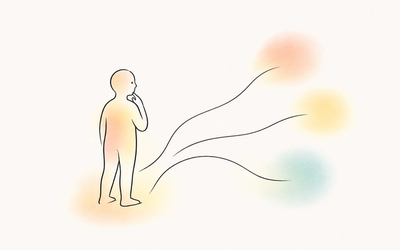
It can travel outwards, where it may become accusation, domination, intimidation, punishment or an attempt to control the other person.
Or it can travel inwards.
I comply when I want to refuse. I stay when I want to leave. I say “it’s fine” when it is not. I override pain, exhaustion, anger or disgust because protecting somebody else from my displeasure feels safer than protecting myself.
In one direction, my aggression may injure your boundary.
In the other, it may injure mine.
Neither is assertiveness.
Passive behaviour is not aggression-free
This is one reason I am cautious about describing passivity as the opposite of aggression.
A passive interaction can look peaceful from the outside while containing considerable violence towards the self.
Imagine somebody asks something of me that I do not want to give.
An aggressive response might be:
You have no right to ask that. You are so selfish.
The force has been transferred into the other person. I am no longer simply protecting my boundary; I am attacking their right to have asked.
A passive response might be:
Of course. No problem.
But there is a problem. I have merely made myself the person who must absorb it.
Assertiveness sounds more like:
I understand why you are asking, but I’m not able to do that.
The important difference is not politeness.
It is ownership.
I do not need to make you bad enough to justify my refusal. And I do not need to make myself small enough to avoid upsetting you.
My no belongs to me.
Assertiveness keeps the force on our side of the boundary
When aggression is owned, it becomes available for deliberate use.
I can decide:
This matters to me.
I want this to stop.
I want something different.
I am willing to act.
And I am responsible for how I act.
That last part matters.
Owning aggression does not mean that whatever we feel entitled to do becomes acceptable. Quite the opposite. Ownership makes responsibility possible.
If I experience my aggression as something you caused me to do, I can easily make you responsible for containing it.
Look what you made me do.
If I experience it as mine, I can choose its form.
I can speak.
I can refuse.
I can negotiate.
I can leave.
I can tolerate your disappointment without converting it into evidence that my boundary is wrong.
That is agency.
Sometimes the boundary arrives late
This can be particularly relevant in neurodivergent experience.
A person may notice discomfort slowly, struggle to identify it through alexithymia, continue accommodating because the social situation is difficult to interpret, or suppress irritation because possible rejection feels disproportionately costly.
Sensory and cognitive load may also accumulate while the person continues functioning.
The boundary is therefore not necessarily absent.
It may be late.
By the time it becomes impossible to ignore, the nervous system may have moved from:
I don’t particularly want this
through
I need this to stop
to
GET THIS AWAY FROM ME.
The eventual response may then look excessive when viewed only at the moment it becomes visible.
But the visible reaction may be the final centimetre of a boundary that has been crossed repeatedly.
This does not make every reaction harmless or remove responsibility for its impact. It changes the useful question.
Rather than only asking, How do I control myself when I explode?, we might also ask:
Where did I first know that something was not all right, and what prevented me from acting then?
Earlier ownership of aggression may allow a much smaller intervention.
A quiet no requires less force than escaping something we have endured for three hours.
Anger is information; aggression gives it legs
Anger often tells us that something important is happening around a boundary, an obstruction, an injustice or a frustrated need.
But recognising anger is not the same as acting effectively.
The aggressive capacity is what gives the information behavioural force.
It allows:
I disagree.
Please stop.
That does not work for me.
I am going home.
I want this.
I am not prepared to continue under those conditions.
Without access to that force, emotional awareness can become strangely impotent: we know what we feel but remain unable to alter our participation.
This is why assertiveness cannot be reduced to learning better sentences.
The sentence is the visible tip.
Underneath it is permission to act as the author of our own life.
Assertiveness protects two people
There is an ethical distinction here that I find particularly useful.
In aggression, I may protect myself by overriding you.
In passivity, I may protect you by overriding myself.
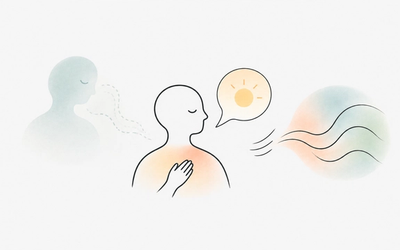
In assertiveness, I attempt to protect the reality of both of us.
I am allowed to have limits, preferences, anger, desire and consequences.
So are you.
You do not have to approve of my boundary for it to exist. I do not have to approve of your response to acknowledge that it exists.
Sometimes there will be no perfectly comfortable resolution. Two legitimate needs can conflict. Relationships do not become healthy by eliminating that conflict. They become more workable when neither person has to disappear in order to resolve it.
That is why I think assertiveness is better understood not as the absence of aggression, but as aggression brought under authorship.
The force remains.
What changes is who is responsible for it and where it goes.
When I can own my aggression, I no longer need to put it into you.
And I no longer need to put it into myself.
I can use it to stand where I am and say:
this is where I begin, this is where you begin, and neither of us has to be erased.