Deapperception: does this belong to now? Does this belong to me?

By Olena Baeva
Published 16 September 2026
An emotion can be completely real while carrying information from more than one place.
I may be frightened by what is happening now, and by what happened years ago.
I may feel another person’s distress in my own body without that distress primarily being mine.
I may be furious about today’s interaction while the scale of the fury has been enlarged by previous experiences my nervous system has not forgotten.
Emotion does not arrive with metadata. It does not tell us how much belongs to the present event, previous experience, sensory load or another person’s distress.
Everything arrives together.
I use the term deapperception for a deliberate attempt to separate those strands for a moment.
Two questions are central:
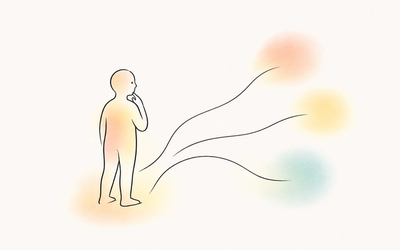
Does it belong to now?
Does it belong to me?
The purpose is not to make emotion smaller. It is to locate it more accurately.
What is deapperception?
Apperception is an old psychological idea: we do not encounter new experience as a blank slate. What is happening now is understood through what we already know, remember and expect.
Contemporary predictive-processing theories describe something compatible in different language. Previous learning contributes to predictions about what incoming sensations mean, while current information modifies those predictions.
We do not encounter the present empty-handed. Our nervous systems bring history with them.
Usually, that is useful.
But sometimes it becomes difficult to distinguish:
what is happening from what this resembles.
I use deapperception to mean:
A deliberate, temporary differentiation of present experience from previous experience, prediction and interpersonal emotional influence before deciding what the emotion means and what response is needed.
It is not deletion of the past.
It is asking:
What is contributing to this experience right now?
Does it belong to now?
Imagine someone does not reply to an important message.
An immediate surge appears:
Something is wrong.
They are withdrawing.
I have done something.
They are going to leave.
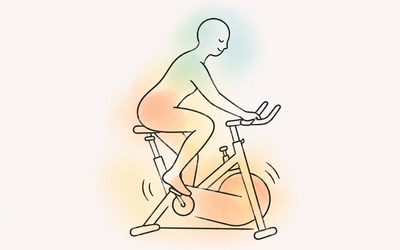
Your body may already be participating through nausea, agitation, heat, tightness or repetitive checking.
All of this is happening now.
But does all of it belong to now?
Perhaps silence previously meant punishment. Perhaps relationships have disappeared without explanation. Perhaps this particular partner has previously withdrawn after conflict.
Or perhaps the person really is behaving in a way that threatens the relationship.
Those possibilities cannot responsibly be collapsed into:
“This is your trauma.”
Nor should they automatically become:
“My feeling proves my interpretation.”
Deapperception asks:
What is this event contributing, and what has arrived with it?
Trauma therapy already contains a related practice in “Then versus Now” discrimination: helping someone distinguish a current cue from an earlier dangerous situation that it resembles.
Deapperception extends that enquiry further.
The question is not necessarily whether the present is safe.
Sometimes it is not.
The question is whether all of the emotional meaning currently attached to the situation belongs to this moment.
Past does not mean irrelevant
This distinction matters.
Suppose a partner has repeatedly broken trust and is late home today.
Some anxiety may come from previous breaches. Those events are in the past, but they remain evidence about this relationship.
So deapperception must never become:
“That belongs to the past, therefore ignore it.”
Instead ask:
Is my nervous system responding to an old situation that merely resembles this one?
or:
Is it responding to accumulated evidence about this actual person or relationship?
Sometimes history distorts the present.
Sometimes history correctly informs the present.
Often both are true.
A feeling may also be historically amplified rather than historically caused.
Someone whose childhood experience associated silence with punishment may experience terror when a partner stops communicating.
The terror may belong partly to then.
But the present withdrawal may still warrant anger, hurt or concern.
After differentiation, the experience might become:
“I am not in the danger my body initially predicted. But I am angry that you have stopped engaging with me.”
The emotion has not been argued away.
It has gained resolution.
Does it belong to me?
The second question concerns self and other.
Human nervous systems affect one another. We respond to tone, expression, posture, movement, silence and distress.
So when I ask:
Does it belong to me?
I do not mean that somebody else’s emotion has literally entered my body.
If anxiety is happening in my body, the experience is mine.
The question is:
Is this state mainly telling me something about my own needs and circumstances, or has my nervous system become organised around the emotional state of the person I am with?
Imagine one partner becomes intensely distressed.
The other becomes distressed because the first is distressed.
The first detects that distress and becomes more frightened.
The second becomes increasingly desperate to make the first person stop feeling.
Very quickly:
your distress → my distress → your response to my distress → more of my distress → more of yours
Two nervous systems have become an amplification circuit.
What looks like lack of empathy may sometimes involve too little differentiation within empathy.
Someone might notice:
“There is a lot of panic here. My body has started panicking too. But I wasn’t frightened before you became frightened.”
That recognition does not require withdrawal.
It may make staying present possible.
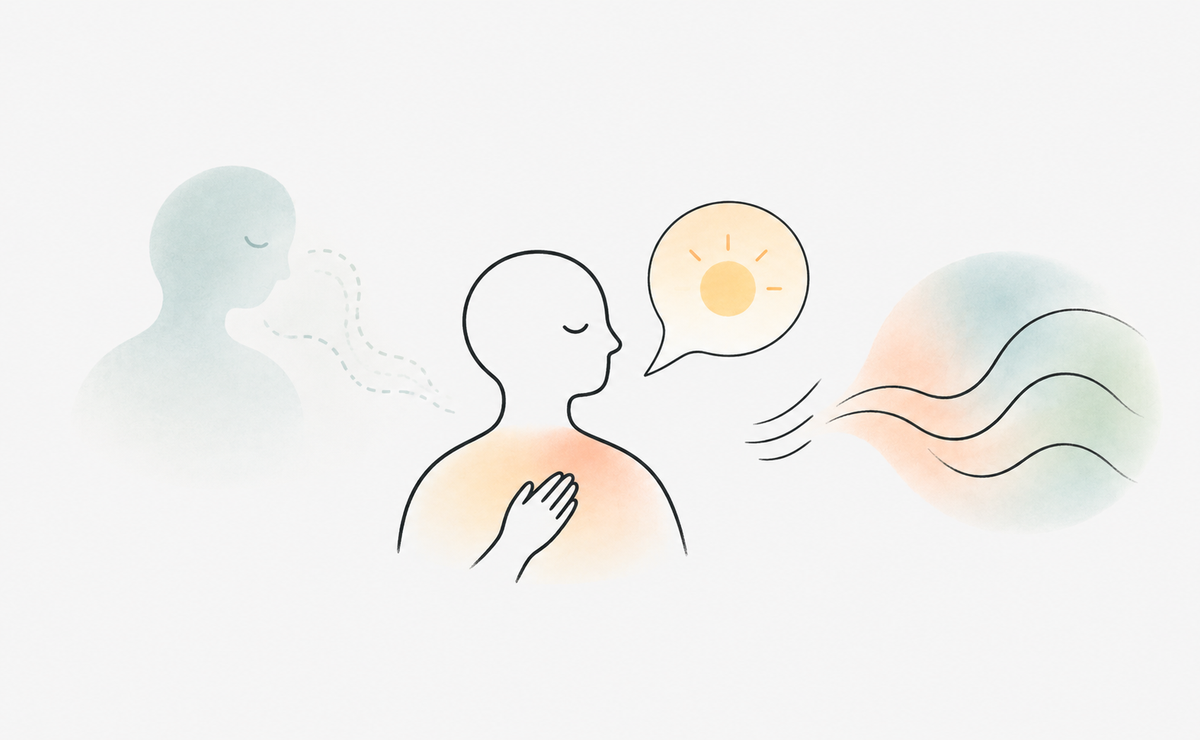
I can recognise:
this feeling is happening in me partly because you are suffering
without needing you to stop suffering so that I can feel all right.
That is containment without absorption.
Why this may matter in neurodivergent relationships
Deapperception is not specifically a neurodivergent intervention, but it can be particularly useful in neurodivergent therapy.
Some neurodivergent people experience high sensory or interpersonal intensity, or identify bodily and emotional states more slowly or differently.
A person may know:
something is happening very strongly
before they know:
what it is, where it came from or what it requires.
Sensory overload, fatigue, burnout and conflict can make that differentiation harder.
There may also be accumulated interpersonal history. Repeated misunderstanding can make puzzlement feel dangerous. Repeated rejection can make small uncertainty recruit much larger consequences. Masking may involve close monitoring of other people’s tone, expression and emotional shifts.
And double-empathy problems mean another person’s interpretation of our state may itself be wrong.
Deapperception therefore offers curiosity before conclusion.
Not:
“You are too sensitive.”
Not:
“Your nervous system is wrong.”
Not:
“If you feel rejected, you were rejected.”
But:
“Something important is happening. Let’s find out what information is in it.”
Three questions
In practice, I use three.
1. Does it belong to now?
Ask:
What happened immediately before this feeling?
What does this situation resemble?
Is something happening now, or is my nervous system predicting what might happen next?
What evidence from the history of this actual relationship remains relevant?
Then:
What part of this feeling still fits what is happening now?
2. Does it belong to me?
Ask:
What was I feeling before this interaction?
Did my state change sharply when the other person’s state changed?
If they were calm, what might I be feeling?
Am I responding to something I need, or urgently trying to make their emotion stop?
The aim is not:
“That’s yours. Deal with it.”
It is:
I can recognise your experience as yours while remaining aware of my response as mine.
3. What still needs responding to?
The first two questions differentiate.
The third reintegrates.
Perhaps:
“Most of the terror belongs to then. But the disrespect belongs to now.”
Perhaps:
“The panic escalated when she panicked. I can stay with her without joining the escalation.”
Perhaps:
“I thought this was rejection sensitivity. Actually, he has repeatedly excluded me from decisions that affect me.”
Or:
“Nothing dangerous is happening now. My body recognised a shape that used to mean danger.”
Then ask:
Given what I know now, what response serves me?
Not emotional scepticism
Deapperception does not ask us to distrust emotion.
Emotion is information.
But information requires interpretation.
An emotion can be valid without every interpretation attached to it being accurate.
And recognising historical material does not make a present relational problem disappear.
Nor is deapperception necessarily a calming technique.
Someone may ask:
“Does this belong to now?”
and discover:
“Yes. Almost entirely.”
They may become more angry because the situation has become clearer.
That is not failure.
The measure is not:
Did I calm down?
It is:
Do I understand more accurately what I am responding to?
Regulation may follow. Boundary-setting may follow. Compassion may follow. Leaving may follow.
The information comes before the prescription.
Better resolution
“I feel it, therefore it is true” gives emotion too much responsibility.
“Feelings aren’t facts” gives emotion too little respect.
Feelings arise within nervous systems trying to make sense of bodies, environments, histories and other people.
They matter enormously.
But they arrive assembled.
Deapperception is an invitation to look briefly at that assembly:
Does it belong to now?
Does it belong to me?
What still needs my attention?
Sometimes what remains is old fear needing care.
Sometimes it is another person’s distress that I can accompany without drowning alongside them.
Sometimes it is sensory overload masquerading as a relationship crisis.
Sometimes accumulated experience is warning me that something genuinely is happening again.
And sometimes the answer is simply:
Yes. This belongs to now.
Yes. This belongs to me.
And I need to respond to it.
The purpose is not less emotion.
It is better resolution: enough separation between the strands of experience to know what we are actually responding to, without losing the information carried by them.