Deep Focus vs Rapid Switching: Understanding Monotropism

By Olena Baeva
Published 16 February 2026
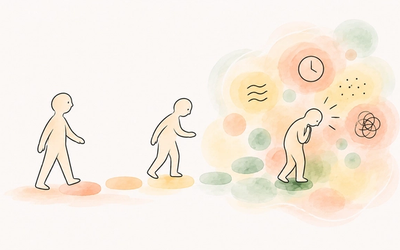
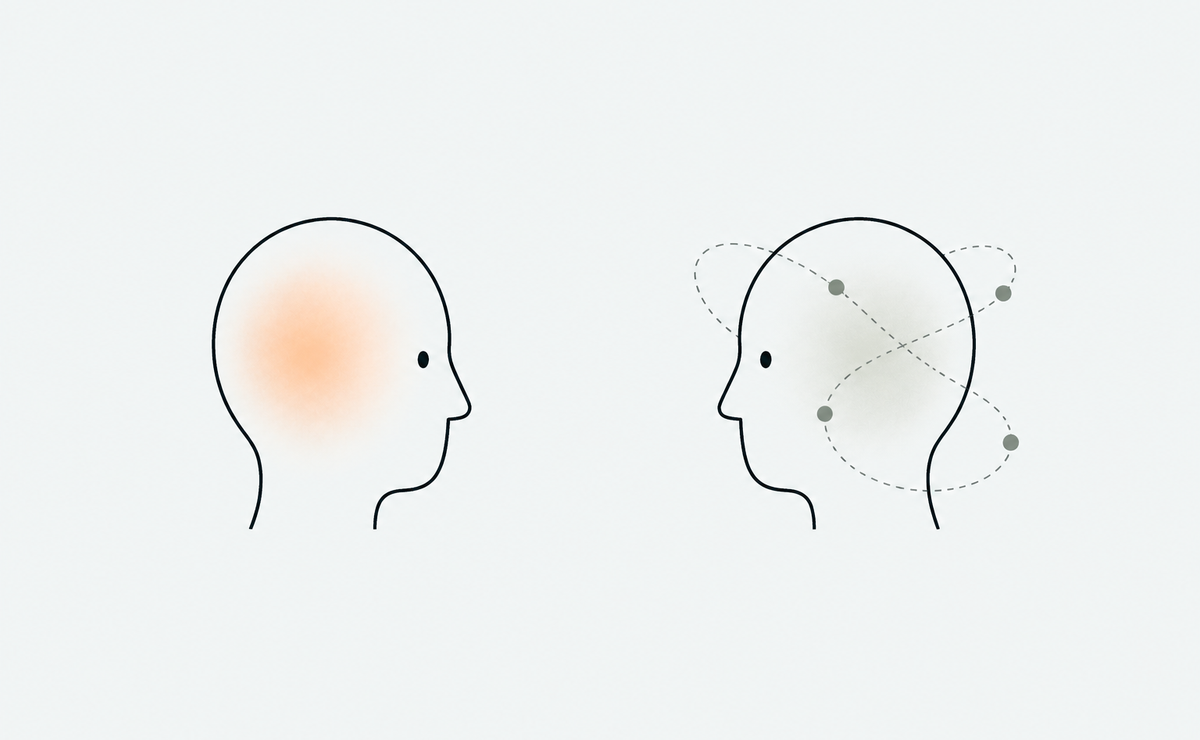
What "monotropism" is Modern life is engineered like a slot machine for your attention. Messages, pings, quick questions, shifting priorities, and the subtle social rule that you should be able to pivot instantly and pleasantly. That works better for some brains than others. Monotropism is an attention-based theory that suggests some people tend to allocate attention narrowly and intensely to a small number of interests at a time, while others distribute attention more broadly across multiple interests.
It is often used to make sense of autistic experience in a way that reduces blame and shame, and highlights both strengths and challenges. If you have ever felt "locked in" to something (for better or worse), or felt a flash of irritation when interrupted, monotropism offers a simple, compassionate explanation: attention does not just move. It transitions. The flower in your mind Imagine your attention as a flower. Each petal is a theme or activity: writing, parenting, cooking, work admin, a difficult conversation, a special interest, a memory loop, scrolling, planning, worrying.
Some people can move between petals fairly smoothly. It looks like multitasking, but in practice a lot of "multitasking" is rapid switching. The American Psychological Association summarises this idea by pointing out that switching carries "switch costs", even when each cost seems tiny, they add up. Other people, or the same person at different times, drop into one petal and go deep.
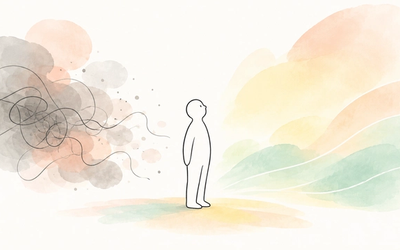
That can feel like flow, mastery, calm, and creative absorption. It can also mean the rest of the world goes quiet. Monotropism describes this as an "attention tunnel", where fewer interests are active at once and they pull more strongly. Now picture the flower's centre, the pistil. This is the part most metaphors miss, and it is where the magic is. To move from the blue petal to the red petal, you pass through the centre.
That centre is a transition hub: Closure of what you were doingOnboarding into what you are doing next This is not just a nice story. Task-switching research shows that switching tasks reliably costs time and mental effort. Even when you try to be quick about it, the brain needs to reconfigure. So the pistil is not optional. It is the mechanism.
Why interruptions sting (and why it is not a character flaw) Interruptions are often treated like minor events. Someone asks a quick question. A notification pops up. A partner starts talking from the other room. A colleague "just needs one thing". But if you are deeply on a petal, an interruption is not only a request for attention. It is a demand for an instant pistil transition.
That demand often lands as irritation, frustration, or a blank freeze. And there is evidence that people do not just imagine this cost. In a well-cited study, Gloria Mark and colleagues found that after interruptions, people often compensate by working faster, but report more stress, higher frustration, more time pressure, and more effort. So if someone says, "I know it was small, but it made me irrationally angry," a more accurate translation is: my brain was forced to switch without completing closure and onboarding, and that feels awful. Because switching is real.
The strengths and the trade-offs (no romance, no pathology) Monotropism is not a superpower and it is not a tragedy. It is a pattern of attention allocation. Strengths of deep petals When attention pours into a petal, people can get: depth of learning and skillcreativity that requires sustained engagementstrong memory for detail within the tunnelmomentum and genuine satisfaction The National Autistic Society frames monotropism as validating depth and intensity while making sense of challenges without stigmatising. Trade-offs of deep petals The same focus can mean: switching feels like Velcro being ripped off the mindbackground needs disappear (time, hunger, messages, appointments)sudden changes create overloadtopic-jumping conversations feel exhaustingother people misread the "slow switch" as rudeness, disinterest, or stubbornness The original academic framing by Dinah Murray with Wendy Lawson and Mike Lesser argues that atypical strategies for allocating attention are central to autistic experience.
Notice what is missing here: moral judgement. This is not "lazy" or "difficult" or "too sensitive". It is attention doing what attention does, in a specific configuration. The multitasking myth (and the unnecessary shame it creates) A lot of shame is born from a bad comparison. People who switch more easily are assumed to be better organised, more mature, more resilient. People who switch with difficulty are assumed to be rigid, dramatic, or obstructive.
That comparison is sloppy. Even in people who appear to "multitask" effortlessly, switching has costs. The costs might be smaller, but they are still there. That is the point of the APA's summary: tiny costs compound. So a kinder, more accurate framing is: Some people have lower switching costs. Some people have higher switching costs. Many people's switching costs increase under stress, fatigue, sensory load, or emotional threat.
When you stop treating switching ability as a virtue, you can stop lecturing yourself and start designing your life. The pistol toolkit (how to make switching less brutal) Here is the part that tends to change things, because insight alone rarely pays the bills. You do not have to redesign your entire personality. You support the pistol. A compact mantra helps because it is easy to remember in the moment: Close, cue, choose. Close, cue, choose.
1) Close: finish, park, or bookmark Closure does not have to mean "complete the whol
e task". It means reducing the open loops your brain is gripping. Finish a small sub-step (save the draft, send the one message, put the tool away). Park intentionally ("I am stopping here on purpose, even though it is unfinished"). Bookmark (write the next action in plain language, so your brain can let go). This is where the dishwasher principle becomes practical: do a small reset, like unloading a few key items or making space, so you can start the next task without it jamming. You are not cleaning the whole kitchen. You are creating enough capacity for the next move.
2) Cue: give the next petal a runway A heads-up is not just politeness
It is cognitive engineering, because preparation reduces switch pain. Useful cues include: Time cue: "In five minutes, I will switch. "Body cue: stand up, drink water, change posture. Place cue: move location if possible. Verbal cue: "I'm moving to the next thing now. " This matters because switching is easier when you are not yanked mid-tunnel. 3) Choose: onboard the next petal properly A lot of switches fail because the next task arrives as a fog. Onboarding makes it concrete. Try a 60-second onboarding: Name the goal in one sentence. Decide what "done for now" looks like. Remove one barrier (open the file, lay out the ingredients, put shoes on).
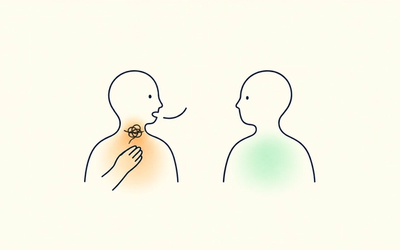
Make action easy. Less heroics, more friction-reduction. The social bit: "Just a quick question" is rarely quick In relationships, monotropism often shows up as a mismatch in switching expectations. One person says, "Can you listen now? " and means "please connect with me". The other person hears "drop your petal instantly" and their nervous system says no. If you do not name the pistol, you get moral stories: "You never prioritise me. ""You are so demanding. ""You do not care. ""You are impossible. " If you name the pistol, you get workable requests.
A simple script, useful at home and at work: "I'm mid-petal. I want to come to you properly. ""Give me two minutes to close this, then I'm fully here. " It is respect for how attention actually functions. For a more personal starting point, you may find the Monotropism Questionnaire useful. It is a brief self-reflection tool, not a diagnostic test, designed to explore how your attention and interests tend to organise themselves: focus, routines, environments, deep interests, rumination, switching, and social energy. Higher scores suggest a more monotropic attention style, where attention gathers deeply around fewer things at a time; lower scores suggest a more polytropic style, where attention may move more fluidly across several things.
Neither is better. The point is not to label yourself neatly, but to notice your pattern more clearly, so you can stop forcing your attention to behave like someone else's and start designing support around how it actually works. A final note: the flower is a map Monotropism is a lens. It helps explain why some people thrive with depth, and why abrupt switching can feel genuinely painful.
It also helps people stop interpreting irritation as a personality defect. And it invites a better question than "What is wrong with me? " "What does my attention need, because switching has a cost? " Build in pistol time. Reduce pointless interruptions. Use closure and cueing. Stop shaming your nervous system for being a nervous system. Close, cue, choose. Smooth to move, less likely to lose.